
For routine visits, emergencies, and general enquiries
Get Direction

Wisdom tooth pain is one of the most common reasons adults visit a dentist outside of their regular check-up. For some people it arrives as a dull, intermittent ache at the back of the jaw that comes and goes over several weeks. For others it becomes something more persistent that affects eating, sleeping, and daily life.
The frustrating part is often not knowing whether the pain is something to monitor or something that needs prompt attention. Wisdom teeth behave differently from person to person. Some people never have any trouble with them at all. Others develop complications that need assessment and removal.
This guide walks through the early signs that wisdom teeth are coming through, what impacted wisdom teeth are and why they cause problems, when removal is clinically recommended, what the procedure involves, how recovery usually progresses, what to eat afterwards, and what to watch for if complications arise.
If you are already in significant pain and want to book an assessment, you can visit our wisdom teeth removal page to get started.
Wisdom teeth are the third and final set of molars. They usually emerge in late adolescence or early adulthood, most commonly between the ages of 17 and 25, though the timing varies.
Most people develop four wisdom teeth, one in each corner of the mouth. It is not unusual to develop fewer than four, and some people develop none at all.
The rest of the adult teeth arrive during childhood, when the jaw still has room to accommodate them. Wisdom teeth are different. They arrive when the jaw is already fully developed, and for many people there is simply not enough space at the back of the mouth for them to come through in the right position. This lack of space is what causes the majority of wisdom tooth problems.
Whether wisdom teeth will cause trouble cannot always be predicted from symptoms alone. Many issues are spotted on dental X-rays before any pain begins, which is why periodic X-rays during a routine dental check-up are a valuable part of monitoring oral health in young adults. Your dentist can assess the position of your wisdom teeth and talk through what they are likely to do well before any significant discomfort develops.
For many people, the first sign that wisdom teeth are starting to erupt is a dull ache or a sense of pressure at the very back of the mouth, behind the last visible molar. In the early stages this can be easy to overlook or put down to something else.
The following are among the most commonly reported early signs:
These early signs do not automatically mean removal is needed. They simply indicate that the teeth are on the move and that it is a good time to have them assessed.
If the early signs are joined by any of the following, the wisdom tooth is likely causing a more significant problem that warrants prompt assessment rather than a wait-and-see approach:
These symptoms may point to infection, impaction, or both. The Australian Dental Association recommends seeking professional assessment when wisdom tooth symptoms progress beyond mild, occasional discomfort.
An impacted wisdom tooth is one that cannot fully erupt into its correct position because it is blocked by the adjacent tooth, the jawbone, or the overlying gum tissue.
Impaction is one of the most common reasons wisdom teeth cause significant pain and end up needing removal, though not every impacted wisdom tooth needs immediate treatment.
Wisdom teeth can be impacted in different ways, depending on the angle at which they are growing beneath the gum line:
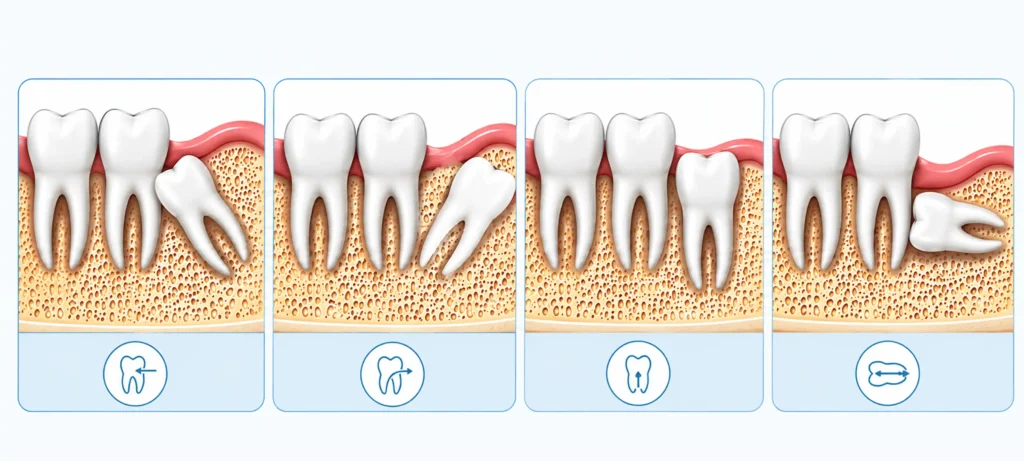
Depending on the type and severity of the impaction, several problems may develop:
Not all impacted wisdom teeth cause noticeable symptoms. Some stay entirely painless for years and are only picked up on X-ray during a routine examination.
Whether a painless impacted wisdom tooth should be removed is a clinical decision your dentist will discuss with you, based on the tooth’s position, the risk it poses to nearby teeth, and your overall oral health. There is no single answer that applies to everyone. Further general information is available from the Healthdirect wisdom teeth guide, the Australian Government health information service.
Not every episode of wisdom tooth pain leads to extraction. The decision to remove a wisdom tooth is a clinical one, made after examination and X-rays, and it depends on factors specific to each patient. Here is a general overview of when removal is commonly recommended and when monitoring may be enough.
Your dentist may recommend removal when:
Not all wisdom teeth need to come out. Monitoring may be appropriate when:
Your dentist will advise on the most appropriate approach for your situation after a thorough assessment.
Some wisdom tooth situations need prompt attention rather than a routine appointment. Contact your dentist as soon as possible, or visit our emergency dental care page, if you experience:
If you have difficulty breathing or swallowing, call 000 immediately, as this is a medical emergency.
Understanding what the procedure involves can take some of the worry out of it and help you prepare, both for the appointment and for the recovery that follows.
Before any treatment goes ahead, your dentist carries out a thorough examination and takes X-rays to assess the position, angle, and depth of the wisdom tooth, and its relationship to nearby teeth and structures.
This information determines whether a simple extraction or a surgical approach is needed, what anaesthetic is appropriate, and how involved the procedure is likely to be. Your dentist will talk you through the planned approach and answer your questions before you agree to proceed.
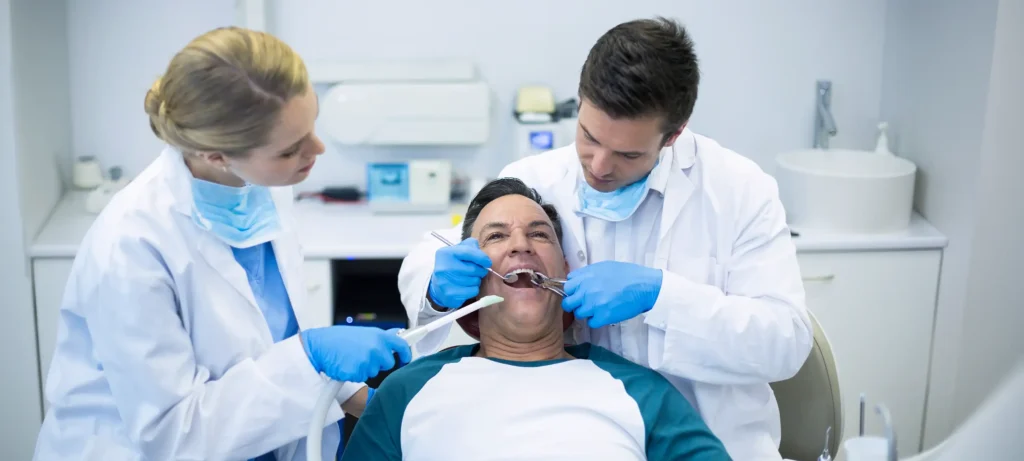
Most wisdom tooth removals are carried out under local anaesthetic, which numbs the area completely so you do not feel pain during the procedure, though you will feel pressure and movement.
For patients who are particularly anxious, or for more complex cases, sedation or general anaesthetic may be arranged through referral to an oral surgeon rather than provided in the dental chair. Your dentist will explain the options and recommend the safest approach for your situation. If you feel nervous about dental treatment generally, our dental anxiety page outlines the comfort options available at Warner Dental, including happy gas and a gentle, unhurried approach.
The approach depends entirely on the position and condition of the tooth:
You can read more about extraction procedures on our tooth extractions page.
Treatment time depends on the complexity of the case. A straightforward erupted wisdom tooth may take 20 to 40 minutes to remove.
Surgical removal of an impacted tooth takes longer, and having several teeth removed at the same appointment extends the overall time. Your dentist will give you a realistic estimate at your assessment.
If you are having sedation through a referral, you will be told not to eat or drink for a set period beforehand and to arrange for someone to drive you home. If you are having local anaesthetic only, you will usually be able to drive yourself.
Before you leave, your dentist or the clinical team will give you clear written aftercare instructions covering what to do and what to avoid in the days ahead.
When choosing any provider for surgical treatment, it is worth confirming that your treating dentist is registered with AHPRA. Registration can be checked online and is a simple step that protects you as a patient.
Recovery varies between patients, depending on the complexity of the procedure, the number of teeth removed, and individual healing. The following is a general guide to what many people experience, though your dentist will give you recovery advice specific to your case.
The first day is the most important for protecting the healing process:
Swelling usually peaks around 48 to 72 hours after the procedure, then gradually reduces. This is often when discomfort is most noticeable.
Taking pain relief as directed and sticking to soft foods helps you through this period. Your dentist may recommend gentle warm saltwater rinses from the second day onward to keep the area clean.
For most straightforward cases, swelling starts to reduce noticeably by days 5 to 7, and many people are able to return to normal daily activities.
Dissolvable sutures, where used, usually begin to break down during this time, and the socket continues to heal beneath the surface.
Soft tissue healing usually takes two to four weeks. Full bone remodelling of the socket takes considerably longer, often several months, though this does not cause ongoing discomfort in most cases.
Individual healing times vary, and more complex surgical cases take longer to recover from than simple extractions.
Diet plays a genuinely useful role in recovery. Choosing the right foods in the days after removal reduces the risk of disturbing the healing socket and makes the whole period more manageable.

In the first day or two, stick to cold or room temperature soft foods that need no chewing near the extraction site:
As the initial soreness eases, you can gradually introduce soft foods that need minimal chewing:
Most people are back to a broadly normal diet within one to two weeks, though this varies with the complexity of the procedure and how healing goes. Your dentist will advise on when it is appropriate to reintroduce different foods.
Dry socket is one of the most commonly discussed complications after wisdom tooth removal, and one of the most useful to understand before your procedure.
After a tooth is removed, a blood clot forms in the empty socket. This clot is essential to healing, protecting the underlying bone and nerve while new tissue forms.
Dry socket happens when that clot is dislodged or fails to form properly, leaving the bone and nerve exposed to air, food, and bacteria. It is one of the more painful complications of extraction and needs treatment from your dentist.
Dry socket typically develops between two and five days after the extraction. Signs to watch for include:
If you notice these symptoms, contact your dentist promptly. Dry socket does not settle quickly on its own and needs professional management.
Dry socket can happen to anyone, but certain factors increase the likelihood:
The most effective prevention is careful attention to your aftercare instructions. The key steps are avoiding straws, avoiding smoking, not rinsing forcefully in the first 24 hours, and keeping the area as undisturbed as possible while the clot forms.
Wisdom teeth removal cost in Australia varies with a range of clinical factors specific to each patient and each case. The figures below are general indicative ranges only and should not be treated as quotes.
The table below provides general indicative ranges only. Your dentist will provide a personalised written estimate after assessing your specific situation.
Procedure Type | Indicative Cost Per Tooth |
Simple extraction | $200 to $600 |
Surgical removal | $400 to $1,200 |
All four teeth under sedation | Varies significantly by case and provider |
These are general ranges based on publicly available information and may not reflect current fees at any particular clinic. Always request a written treatment estimate before proceeding.
Wisdom tooth removal performed in a dental chair is not covered by Medicare, which generally does not cover dental treatment for adults.
Private health insurance coverage depends on your fund and policy. Some extras or major dental policies may provide a partial rebate for surgical removal, depending on the clinical circumstances and item codes involved.
The private health insurance guide is a useful starting point for understanding what your policy may cover. Always contact your fund directly before your appointment to confirm your level of cover. Our payment options page outlines the health funds we accept at Warner Dental and the payment options available to patients.
Many wisdom tooth removals, including a range of surgical cases, are carried out successfully by experienced general dentists.
More complex cases, such as deeply impacted teeth, teeth close to important anatomical structures, or other complicating factors, may be referred to a specialist oral surgeon. Your dentist will advise you honestly at your assessment if your case is beyond what they can appropriately manage in their clinic.
Warner Dental offers wisdom tooth assessment and removal from our clinic in Warner, serving patients across North Brisbane and the Moreton Bay region. We assess wisdom teeth using clinical examination and dental X-rays to determine their position, the type of impaction where present, and the most appropriate management for each patient.
We see patients for wisdom tooth concerns from across the surrounding area, including those looking for a dentist near Joyner and a dentist near Petrie. If you feel anxious about the procedure, we have experience caring for nervous patients and will talk you through every step before anything proceeds.
Complex cases that require specialist management, including those needing sedation or general anaesthetic, are referred to trusted oral surgeons, and we coordinate the process so your care stays seamless. We will always be honest with you at your assessment about what can be managed at our clinic and what may need a specialist referral.
To book a wisdom tooth assessment, call us on (07) 3882 3200 or visit our wisdom teeth removal page for more information.
Note: All information here is general in nature. Wisdom teeth do not always need to be removed, and a clinical assessment including X-rays is required before any recommendation can be made. Outcomes vary between individuals. Treatment is provided by registered dental practitioners only.
FAQs
The clearest way to know is a clinical assessment with X-rays. Symptoms such as recurring pain, swelling, difficulty cleaning the back teeth, or a bad taste at the back of the mouth are common reasons people come in for assessment. Not all wisdom teeth need to be removed. Your dentist will assess the position of the teeth, any impact on nearby teeth, and the clinical risk they pose before recommending removal or monitoring.
An impacted wisdom tooth is one that cannot fully erupt into the correct position because it is blocked by the adjacent tooth, bone, or gum. Depending on the angle and degree of impaction, this can lead to infection of the surrounding gum, decay on the adjacent tooth, persistent pain, or in some cases a cyst forming around the unerupted tooth. The type and severity of impaction determines how it is managed.
Not necessarily. The decision to remove one, some, or all four depends on the clinical situation of each individual tooth. In some cases it is practical to remove all four at one appointment. In others, teeth are removed individually or in stages. Your dentist will discuss the most appropriate approach after assessing all four teeth on X-ray and examination.
Treatment time varies with complexity. A simple extraction of a fully erupted wisdom tooth may take 20 to 40 minutes. Surgical removal of a deeply impacted tooth takes longer. Having several teeth removed at one appointment adds to the overall time. Your dentist will give you a realistic estimate at your assessment based on the specific findings.
During the procedure, local anaesthetic numbs the area so you do not feel pain. You will feel pressure and movement, but not pain. After the anaesthetic wears off, some soreness and swelling is expected and normal, particularly in the first few days. Pain relief recommended or prescribed by your dentist helps manage this. The level of discomfort varies between patients and between simple and surgical cases.
Recovery varies with complexity. For many straightforward cases, people return to normal daily activities within five to seven days. Soft tissue healing usually takes two to four weeks. More complex surgical cases take longer. Your dentist will give you a specific recovery expectation based on your procedure.
In the first 24 to 48 hours, stick to cold or room temperature soft foods that need no chewing, such as yoghurt, mashed banana, smooth soup eaten with a spoon, and soft scrambled eggs. Avoid very hot foods, hard or crunchy foods, and straws. As healing progresses over days three to seven, soft foods such as mashed potato, soft pasta, and well-cooked fish can be introduced. Your dentist will advise on when it is appropriate to return to a normal diet.
Dry socket occurs when the blood clot in the extraction socket is dislodged or fails to form, leaving the underlying bone exposed. It is one of the more painful complications and usually develops two to five days after the procedure. Symptoms include a return of significant throbbing pain, a visibly empty socket, and a bad taste or smell. To reduce the risk, avoid straws, avoid smoking, do not rinse forcefully in the first 24 hours, and follow your aftercare instructions carefully. Contact your dentist promptly if these symptoms develop.
Cost varies with whether the procedure is a simple extraction or a surgical removal, the number of teeth involved, the anaesthetic used, and the complexity of the case. As a general indicative range, simple extractions may cost around $200 to $600 per tooth, and surgical removal around $400 to $1,200 per tooth. These are general ranges only, not quotes. Your dentist will provide a written estimate after assessing your specific situation.
Wisdom tooth removal in a dental chair is not covered by Medicare for adults. Private health insurance coverage depends on your fund and level of cover. Some extras and major dental policies may provide a partial rebate. Contact your health fund directly before your appointment to confirm what your policy covers. The private health insurance guide is a useful resource for understanding your cover.
Many wisdom tooth removals, including a range of surgical cases, are carried out by experienced general dentists. Complex cases involving deeply impacted teeth or teeth close to important anatomical structures may be referred to a specialist oral surgeon. Your dentist will advise you honestly at your assessment about whether your case can be managed at their clinic or whether a referral is appropriate.
The duration varies significantly between people. Some experience intermittent discomfort over several weeks or months as wisdom teeth erupt. Others have more prolonged pain, particularly if impaction or infection is involved. Pain that is worsening, lasting more than a few days, or accompanied by swelling or fever should be assessed by a dentist rather than managed at home with pain relief alone.
Signs that may indicate infection include increasing rather than decreasing pain after the first few days, swelling that is not reducing or is getting worse, a fever, a persistent bad taste or smell from the site, and discharge from the socket. Contact your dentist promptly if you notice any of these. Do not wait to see if they resolve on their own.
Wisdom teeth, particularly impacted ones, can contribute to referred pain in the jaw, ear, and occasionally the head. Because the wisdom teeth sit close to the jaw joint and surrounding muscles, inflammation or infection in this area can produce pain that radiates beyond the tooth itself. If you have unexplained headaches, jaw tightness, or ear pain alongside discomfort at the back of your mouth, it is worth having your wisdom teeth assessed as part of a broader examination.