
For routine visits, emergencies, and general enquiries
Get Direction
Implant-Supported Dentures
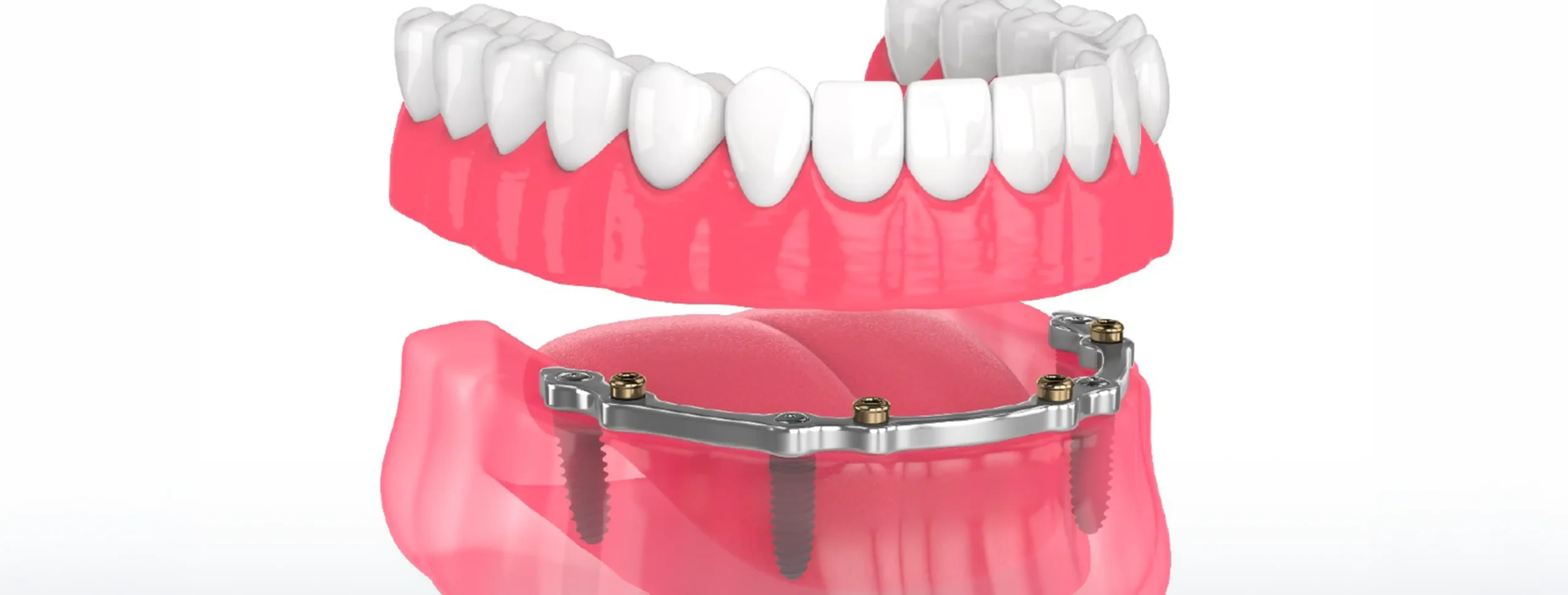
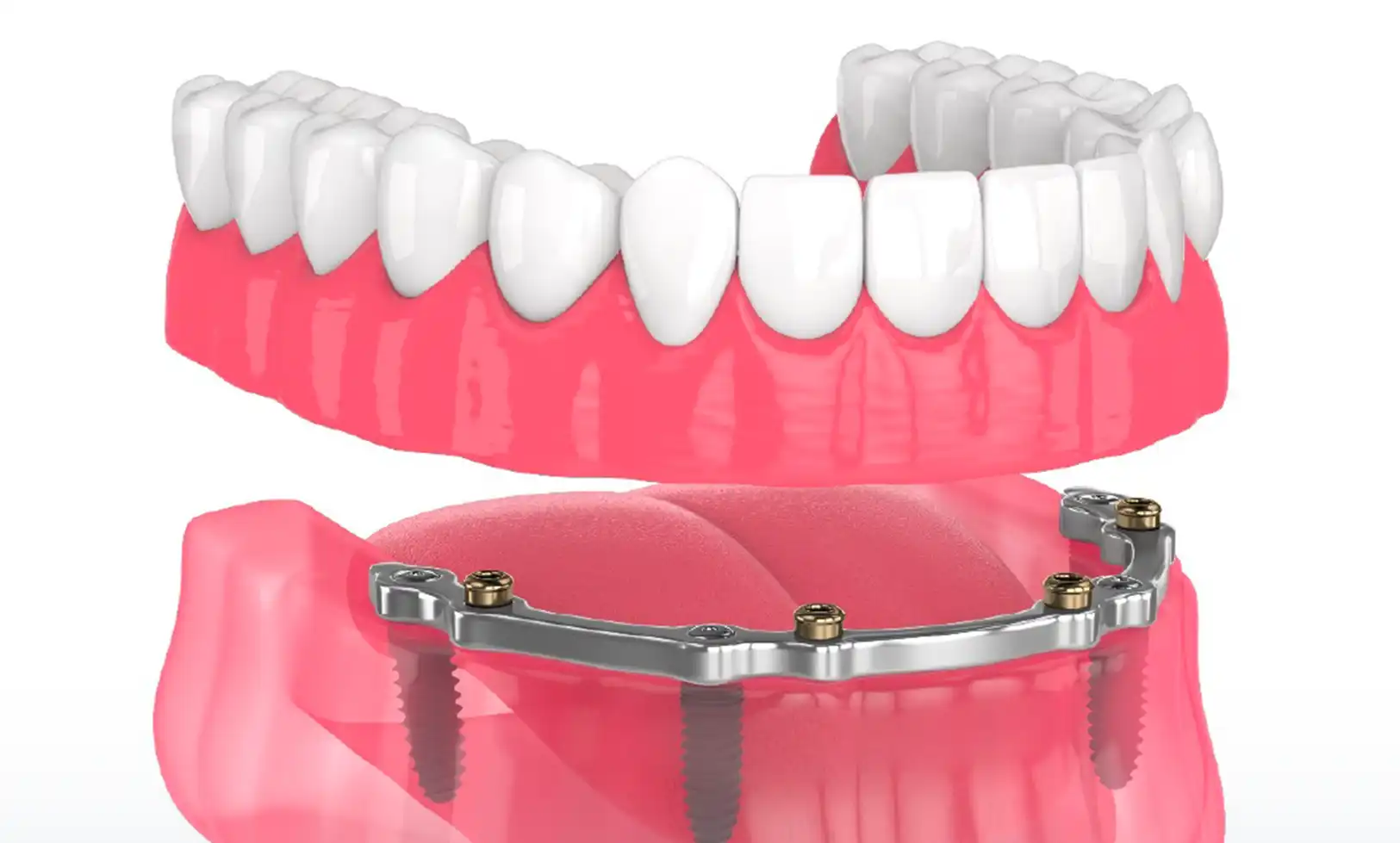
At Warner Dental, we provide implant-supported dentures for patients in Warner and North Brisbane who are missing most or all of their teeth, or who find their removable dentures move during eating and speaking.
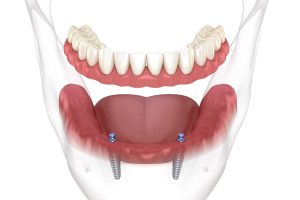
An implant-supported denture attaches to two or more dental implants placed in the jaw. Unlike a denture that rests only on the gums, it clips onto the implants for added support while remaining removable for daily cleaning.
Suitability depends on your individual circumstances and is confirmed at a consultation. Implant treatment is a surgical procedure and carries risks. Outcomes vary between patients.
An implant-supported denture, also called an implant retained denture or overdenture, is a removable denture that connects to dental implants in the jaw rather than resting on the gums alone.
Instead of relying on suction or adhesive, the denture clips onto implants that act as anchors. This design may reduce movement when speaking and eating compared with a conventional removable denture.
It may be an option for patients who:
A clinical examination, 3D imaging, and a full medical and dental assessment are needed to confirm suitability.
Patients often ask how dentures compare with implants. The main options are set out below:
Each option has its own benefits, limitations, costs, and risks. If you are comparing fixed options, see our pages on All-on-4 and All-on-X and implant supported dentures vs All-on-4. For conventional options, see full and partial dentures.
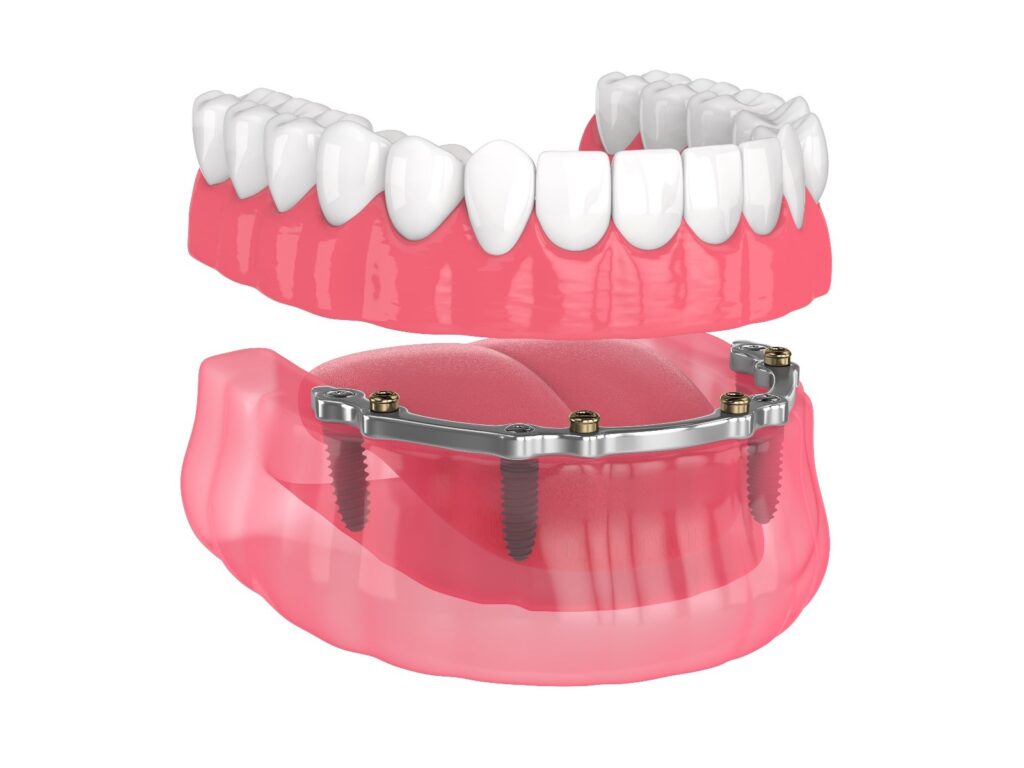
The difference lies in how the denture is supported.
Many patients report improved stability with implant retained dentures, though comfort and function vary between individuals.
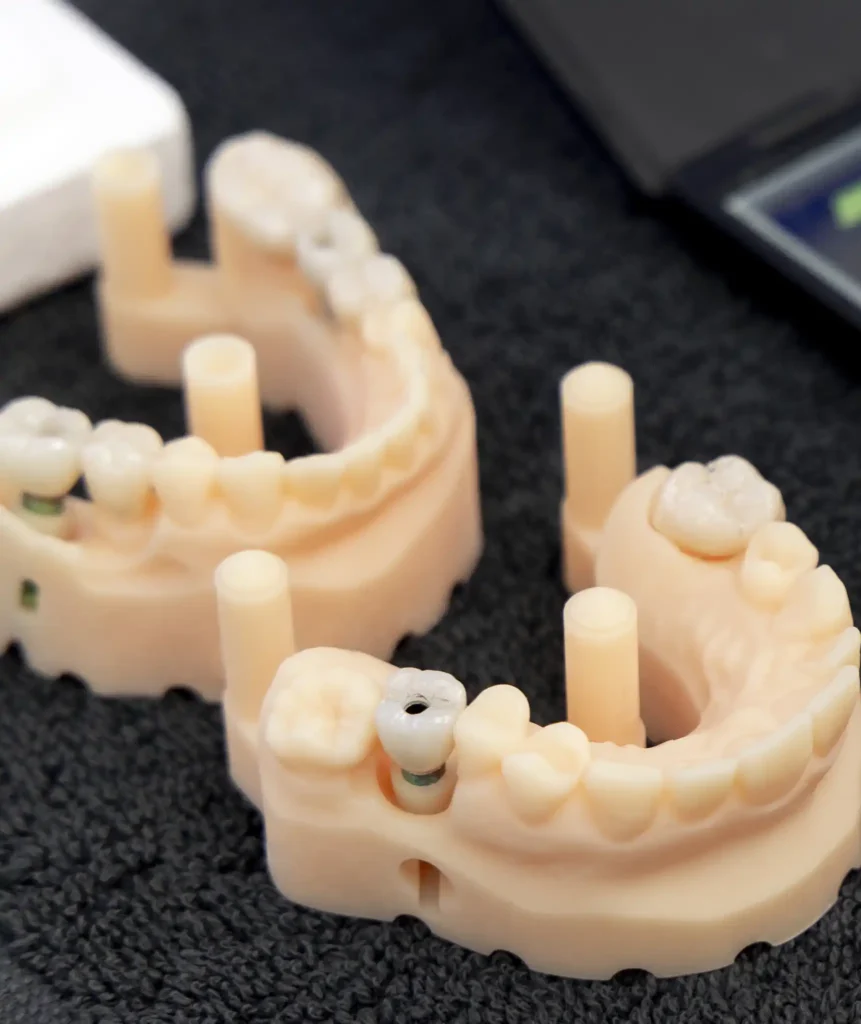
Two to four implants are usually placed in the jaw under local anaesthesia, with sedation available in appropriate cases. A healing period of around three to six months allows the implants to integrate with the bone. Where needed, we use guided implant surgery for planning.
Surgical risks may include infection, implant failure, nerve injury, and delayed healing. Risk varies with medical history, smoking status, and bone quality.
Ongoing maintenance and review appointments are required.
Implant-supported dentures are not suitable for everyone. Suitability depends on your individual clinical situation.
You may be considered for a denture supported by implants if you:
Bone grafting may be needed in some cases. Smoking and certain medical conditions may affect healing.
With appropriate care, dental implants may function for many years. The denture component may need periodic maintenance, and attachment parts can wear and need replacing. Longevity depends on oral hygiene, general health, and regular reviews.
The cost depends on the number of implants, the type of attachment system, whether bone grafting is required, and the laboratory and surgical work involved. You receive an itemised written treatment plan after your consultation. See our payment options for the funds and plans we accept.
If you are missing most or all of your teeth, or your removable dentures feel loose, a consultation can help determine whether implant-supported dentures are a suitable option for you. Book a consultation or call (07) 3882 3200.
Protect your smile with regular care at Warner Dental.
FAQs
There is no single price, because the cost depends on how many implants are placed, the type of attachment system used, whether bone grafting is needed, and the laboratory work involved. Your health fund cover and any rebates also affect what you pay out of pocket. After your consultation and 3D imaging, we provide an itemised written treatment plan so you can see each component before deciding whether to proceed.
An implant-supported denture is removable, so you take it out for daily cleaning, and it usually clips onto two to four implants. An All-on-4 or All-on-X restoration is a fixed bridge that stays in the mouth and is only removed by a dentist. Fixed options often use more implants and different materials. The right choice depends on your bone, budget, and preference, which is discussed at your consultation. You can read more on our implant supported dentures vs All-on-4 page.
Because the denture is removable, you take it out each day to clean it and to clean around the implant attachments and your gums. Your dentist will show you the recommended technique and products at your fitting. Regular professional reviews are important so we can check the implants, the gum tissue, and the condition of the clips or attachments, which can wear over time.
There is no strict upper age limit. What matters more than age is your general health, the amount and quality of jawbone available, and whether you can safely undergo minor oral surgery. Some medical conditions and smoking can affect healing. A full medical and dental assessment helps determine whether treatment is suitable for you.
They are designed to feel more secure than a denture that rests only on the gums, and many patients find speaking and eating more comfortable. However, an implant-supported denture is still a denture, so the experience differs from natural teeth and individual results vary. Your dentist will explain what you can realistically expect for your situation.
If you currently wear removable dentures and they feel loose, you may be able to have implants placed to improve their support, depending on your bone and gum health. In some cases an existing denture can be adapted, and in others a new denture is made to attach to the implants. This is assessed at your consultation. You can also compare conventional options on our full and partial dentures page.
As with any surgical procedure, implant placement carries risks. These may include infection, implant failure, nerve injury, sinus involvement in the upper jaw, and delayed healing. The level of risk varies with your medical history, smoking status, and bone quality. These risks, along with the benefits and alternatives, are explained in full before you decide whether to go ahead.
Treatment usually spans several months. After the initial consultation and planning, implants are placed and then need roughly three to six months to integrate with the bone before the final denture is attached. A temporary denture may be worn during healing. The exact timeline depends on your individual healing and whether procedures such as bone grafting are needed.
Single dental implants replace individual missing teeth without affecting neighbouring teeth. A custom crown is attached to the implant to restore appearance and chewing function.
All-on-4 or All-on-X implant treatment replaces a full arch of missing teeth using a small number of strategically placed implants that support a fixed bridge.
Implant-supported dentures connect to dental implants for improved stability compared with conventional removable dentures, helping reduce movement while speaking or eating.
For patients with extensive tooth loss or complex dental issues, full mouth rehabilitation may combine implants with restorative and cosmetic treatments to restore both function and appearance.
Guided implant surgery uses three-dimensional digital planning and a fabricated surgical guide to position implants accurately according to the patient’s anatomy and prosthetic requirements.