
For routine visits, emergencies, and general enquiries
Get Direction
General Dentistry
Most mouth ulcers are harmless and heal on their own within two weeks. Every so often a sore that will not settle can be a sign of something that needs a closer look, and telling the two apart is hard on your own. This page gives you a straight answer: what is normal, what is not, and when it is worth getting checked.
At Warner Dental we care for oral ulcers and include an oral cancer screening as part of your dental check-up. Outcomes vary between patients, and this page is general information, not a diagnosis.
This is the question most people arrive with, so here is the honest answer first. The large majority of mouth ulcers are not cancer. A common ulcer is usually painful, follows an obvious trigger like a bite, and clears within two weeks.
The signs worth acting on are different. See a dentist or doctor if any of these last longer than two to three weeks:
Many early changes are painless, which is exactly why they get ignored. Getting one checked does not mean something is wrong. It means you find out either way. For a plain-language overview of warning signs, the government’s healthdirect mouth cancer guide is a reliable read.
Oral ulceration is the term for small sores or breaks in the lining of your mouth. They can turn up almost anywhere:
Most are minor, sore for a few days, then gone. The ones worth watching are the ones that stay.
Ulcers have many triggers, and often more than one is at play. Common causes include:
If ulcers keep appearing on your gums alongside soreness or bleeding, that can point to gum problems rather than a simple ulcer, which is worth having looked at.
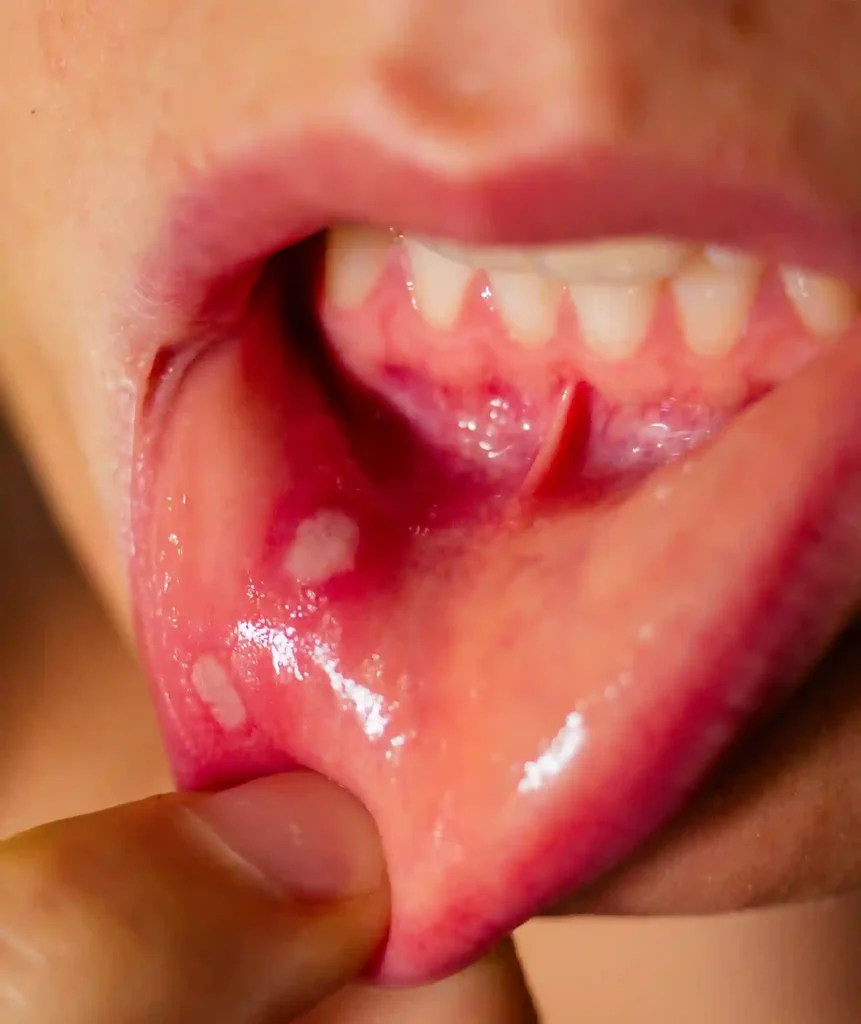
A typical minor ulcer heals within seven to fourteen days without any treatment. How quickly yours settles depends on:
The mark most dentists use is two weeks. An ulcer that has not healed after two weeks, or that keeps returning to the same place, should be assessed rather than watched any longer.
There is no national mouth-cancer screening program in Australia, so a check at the dentist is one of the main ways changes get spotted early. It is quick and painless, and it already forms part of your visit.
During your routine dental check-up we:
A screening is not a diagnosis. If we see something that needs further investigation, we explain what we have found and refer you for specialist assessment or a biopsy. Finding changes early can support better treatment outcomes, though results vary from person to person.
For an everyday ulcer, care focuses on comfort while it heals and on removing whatever set it off. Depending on your situation, that may involve:
Your dentist can talk you through soothing options suited to you. If ulcers are frequent or stubborn, further investigation may be needed to find the reason behind them.
Persistent ulcers or unusual lesions may indicate underlying health concerns. Early identification:
Regular dental visits play an important role in prevention.
Book an appointment if:
If you are coming to us for the first time, our new patients page explains what to expect, and you can find more general advice on our dental health tips blog.
If you have a mouth ulcer that will not settle, or you would like a routine oral cancer screening, we can help you find out where you stand. Book a consultation or call (07) 3882 3200.
This information is general in nature and does not replace personalised dental or medical advice.
Protect your smile with regular care at Warner Dental.
FAQs
A routine oral cancer screening is carried out as part of your general dental examination, so it is not billed as a separate item. What you pay for the check-up itself depends on your health fund and level of cover. If any further treatment or investigation is recommended, you receive an itemised written treatment plan first, so you can see each cost before deciding to go ahead.
Yes, and that is the point of routine screening. Many early changes in the mouth are painless and easy to miss on your own, so they are often first noticed by a dentist during a check-up. Having your soft tissues looked over at each visit means anything unusual is picked up sooner rather than later.
For most people, once at each regular dental check-up is appropriate, which is commonly every six months. If you have higher risk factors, such as smoking or heavier alcohol use, your dentist may suggest checking more often. The right interval for you is discussed at your appointment.
The main risk factors are tobacco and alcohol, and the risk climbs when they are combined. Sun exposure raises the risk of lip cancer, and certain strains of HPV are also linked to cancers in the mouth and throat. Having one or more risk factors does not mean you will develop cancer, and some people with none still do, which is why regular checks matter for everyone.
If we notice an area that needs further investigation, we explain clearly what we have seen and refer you to the appropriate specialist or doctor. A firm diagnosis usually involves a biopsy, where a small tissue sample is examined. A referral is a precaution to get answers, and in many cases the findings turn out to be harmless.
A canker sore is an ulcer inside the mouth and is not contagious. A cold sore is caused by the herpes simplex virus, usually appears on or around the lips, and is contagious, especially when blistered. They are managed differently, so if you are unsure which you have, it is worth having it looked at.
Yes. Children get mouth ulcers for many of the same reasons adults do, often from biting the cheek or a sharp edge on a tooth. Most settle quickly on their own. If your child has an ulcer that is not healing, is very painful, or keeps returning, bring them in and we will take a look.
An ulcer that recurs in exactly the same place is worth investigating, because it can point to a persistent local cause such as a sharp tooth, an old restoration or a denture edge, or sometimes an underlying health factor. Rather than treating each flare-up in isolation, we look for the reason behind the pattern so it can be addressed.
Prompt assessment and treatment to relieve discomfort and address the underlying cause.
Repairing damaged teeth to restore function and protect against further problems.
Fast adjustments or repairs to restore comfort and usability.
Urgent care for injuries caused by accidents, sports, or unexpected impacts.
Immediate treatment of infection to relieve pain and prevent complications.
Replacing or repairing restorations to protect exposed teeth.
Identifying and managing the cause of sudden or ongoing tooth sensitivity.
Gentle treatment to relieve pain and support proper healing after extraction.
Assessment of persistent sores and thorough screening for early detection of oral abnormalities.