For routine visits, emergencies, and general enquiries
Get Direction
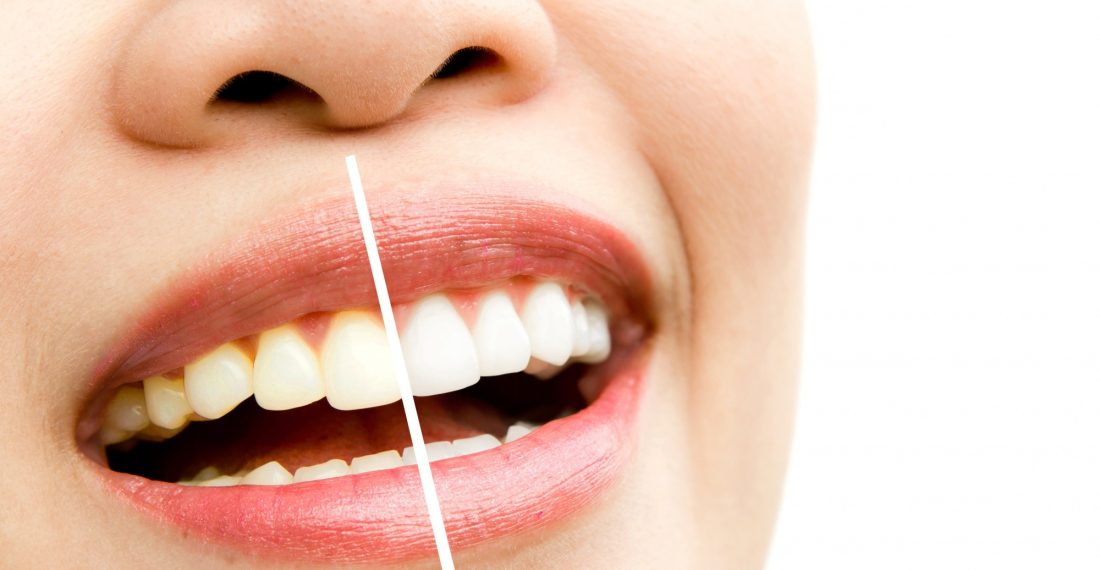
For many people in Warner, a bright smile is a significant motivator in maintaining their confidence while carrying out their daily activities. Often, a “dazzling” appearance is associated with healthy teeth, clinical research shows that tooth whiteness is not a definitive indicator of oral well-being; a person with naturally yellower teeth can have strong enamel, which results in better functional health than someone with bleached teeth and untreated decay.
Yet, many still desire to have whiter teeth, which can sometimes lead patients to try home remedies, causing more risk to develop underlying issues like tooth bleaching or gum health concerns. Whether you are preparing for personally important events, or local community highlights like the annual Hills Carnivale in May or the Sips & Sounds festival in Warner, it is essential to remember that teeth whitening is a clinical procedure. Results vary between individuals, and a consultation at our clinic in the Marketplace Warner shopping centre is required to determine whether the procedure is suitable for your oral health.
When seeking teeth whitening procedure services in a dental clinic, patients generally get to choose between seeing immediate results and long-term convenience. We call these clinical procedures in-chair professional whitening, which is the most efficient method for rapid improvement. It utilizes high-concentration hydrogen peroxide that is legally registered to licensed dental practitioners.
Alternatively, for those wondering how to whiten teeth at home safely, we at Warner Dental take home kits. Unlike one-size-fits-all options, these kits use trays molded from your unique dental impressions to ensure the whitening agent remains on the enamel. It reduces the chance of the whitening agent coming into contact with sensitive gum tissue, which could help in developing gum related issues. You can also find other methods to whiten your teeth, teeth whitening strips, which we will talk about later on.
Many online trends suggest how to whiten teeth naturally using household items, but some of these methods have the potential to bear significant risks to your teeth’s enamel. A common question we hear people asking is, does baking soda whiten teeth? To address this, while baking soda can get your teeth to look whiter, it is due to one of baking soda’s properties which makes it mildly abrasive, letting it scrub away surface stains. What it does not do is that it doesn’t chemically bleach the tooth. This means that frequent usage can carry the risk of permanently thinning your tooth enamel, eventually exposing the yellower dentine underneath and instead making teeth look even darker in the long run.
Similarly, acidic “hacks” involving lemon juice or vinegar can also cause irreversible erosion, increasing the risk of cavities and sensitivity. Therefore, the safest bet is to book a consultation and ask your dentist what home remedies may bring benefits for your unique oral situation.
Many people find it frustrating when even after they maintain a strict brushing routine, they still notice their teeth having a dull shade when they look in the mirror. This occurs because yellowing is often a natural byproduct of biology rather than simply a sign of poor hygiene. As our teeth see more usage, which is normally more noticeable as we age, our protective outer enamel naturally thins, revealing the yellowish layer of dentine underneath. While a toothbrush is excellent for daily maintenance and removing extrinsic stains, it cannot address the intrinsic stains that are a part of the internal tooth structure. Any case where the teeth can lose its shine due to its enamel starting to erode or because of any internal issue or trauma is not a case that’s easily solvable by simple daily brushing.
Furthermore, some of the several external factors that can contribute to discoloration that brushing cannot help are:
Medications: Certain blood pressure medications or past antibiotic use, such as tetracycline can discolor teeth from the inside out.
Calculus Buildup: Brushing effectively removes soft plaque, but if your plaque has already hardened into “calculus” (tartar), it can only be removed by professional clinical tools.
Micro-Cracks: Over time, enamel can develop microscopic cracks capable of trapping miniscule pieces from food and drink, which are often too deep for regular toothbrushes to reach and for toothpastes to affect.
Many residents begin their whitening journey in the pharmacy aisle, but some remain curious about how effective all of these over-the-counter (OTC) options like teeth whitening strips and toothpastes can be. As expected of quick and easy solutions, they are both capable of providing accessible whitening options while usually involving significant trade-offs compared to other methods. Both options function through different mechanisms to whiten teeth, mainly due to their core working differences. Whitening strip’s purely chemical reaction compared to special whitening toothpastes’ low dose chemicals with the addition of special abrasives, which depends on you to provide scrubbing action to realise the whitening effects.
Whitening strips can provide a mild lift of one or two shades, but their “one-size-fits-all” design often leaves uneven results. Because they are not able to conform to your unique dental anatomy, they frequently miss the deeper crevices between teeth, resulting in a patchy appearance or “missing spots” that users frequently gripe about. Furthermore, without a professional screening, applying these chemical agents over sensitive gums or untreated decay can lead to sharp pain and irritation.
Most whitening toothpastes do not bleach the internal structure of the tooth. Instead, they rely on mild abrasives like hydrated silica or calcium carbonate that can polish away extrinsic stains from coffee, tea, or tobacco on the enamel’s surface. Overusing harsh abrasives can permanently thin your enamel, eventually revealing the yellowish dentine underneath and making teeth look even darker over time.
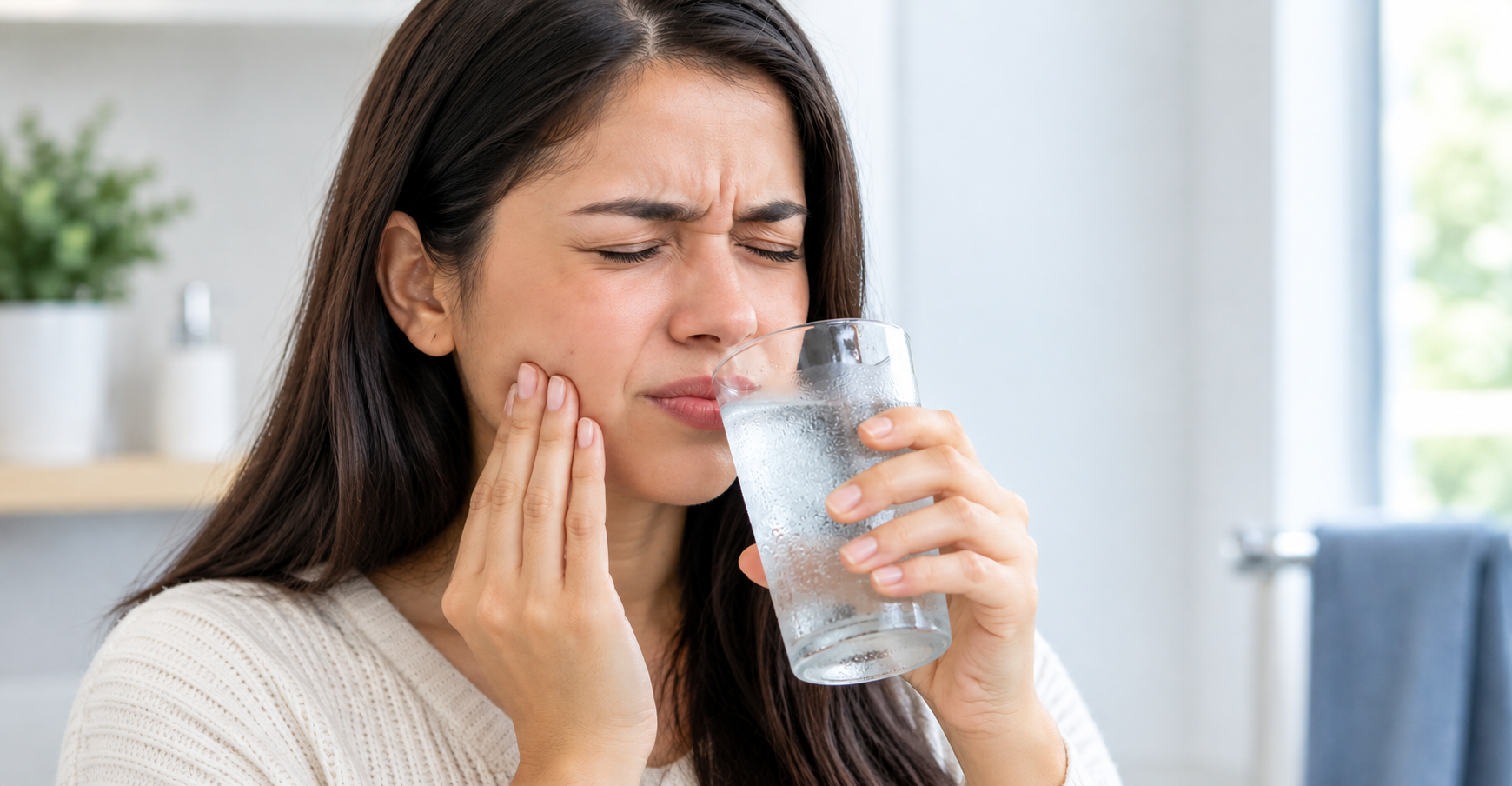
Analysing the data from many dental patients, it is safe to say that tooth discoloration can often be accompanied by other symptoms or issues too. One such case is regarding teeth sensitivity. Many dental patients seek to stop teeth sensitivity issues, which can be a sign of thinning enamel or recession. To help soothe this issue, dentists can use professional desensitizing agents like potassium nitrate during teeth whitening procedures.
In cases where a single tooth has darkened following a root canal treatment, standard whitening will not work. These instances require internal bleaching, a specialized technique to whiten the tooth from the inside out. It is also a clinical fact that whitening gels do not work on dental crowns or dentures, as non-porous materials like acrylic and porcelain do not respond to bleaching agents.
The primary advantage of choosing a professional procedure at Warner Dental is the clinical overview provided by our experienced team. For two decades, our dentists have combined advanced digital diagnostics with evidence-based whitening protocols to ensure patient safety. By choosing a local Warner dentist, you ensure that your treatment is preceded by a thorough health screening to rule out untreated decay or Periodontal Issues that could otherwise worsen if a whitening procedure is blindly undertaken.
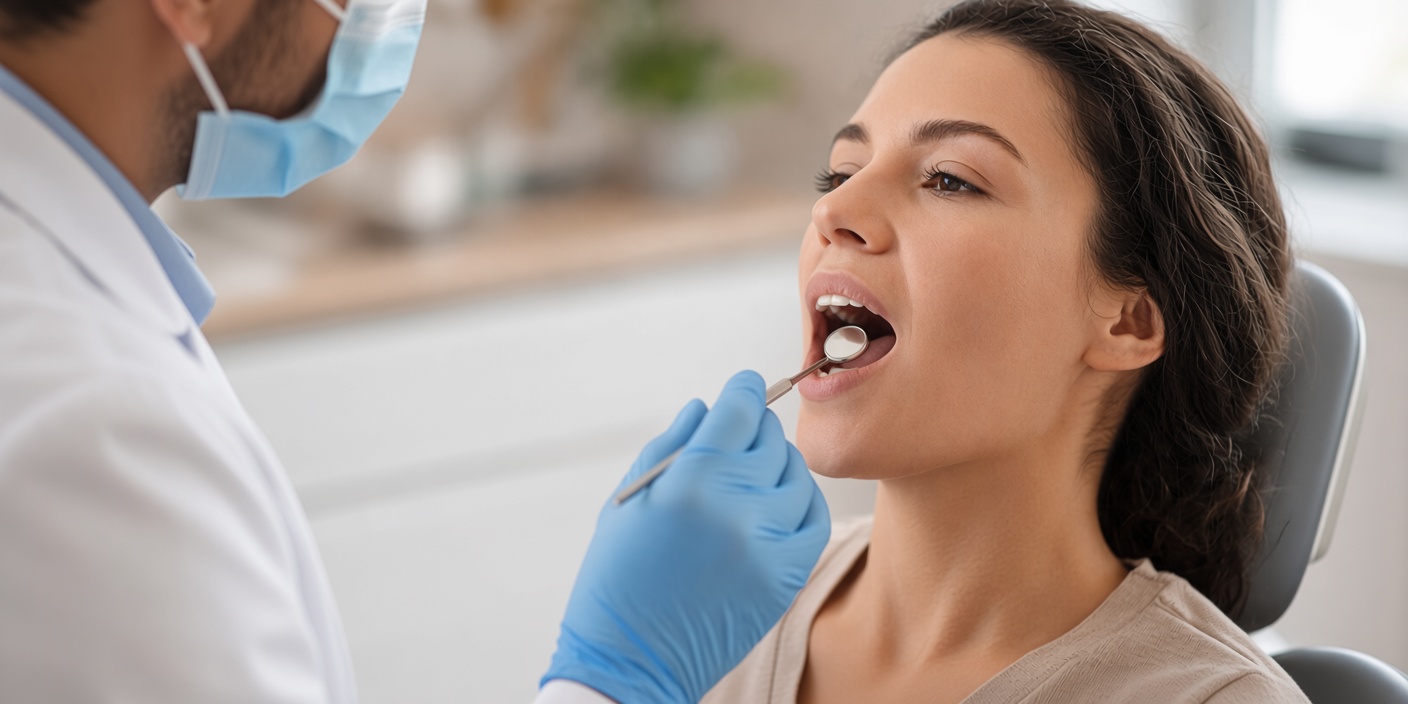
A professional scale and clean is essential before teeth whitening to remove plaque and tartar, creating a smooth enamel surface for even gel contact. Think of it as bleaching your hair first, before applying other colours so as to ensure an even colouring process. With context to your teeth, tartar and plaque act as physical barriers, blocking whitening agents. Prior cleaning ensures uniform penetration resulting in a more effective procedure with consistent whitening effects across all tooth surfaces.
Alt text: A patient going through a dental checkup to check if he can undergo teeth whitening.
In addition, a pre-whitening screening is useful to detect underlying dental issues that may be the cause for discoloured teeth, or cases where the whitening procedure may worsen said underlying issues. Dentists will check for untreated decay or receding gums, as applying high-concentration bleach to an open cavity can cause intense, sharp pain and potential nerve damage. Doing all of this transforms a simple teeth whitening procedure from a generic process into a tailored, safe treatment based on your oral health status.
“How much does teeth whitening cost?” is a common concern for local families in Australia. While investigating the costs, it is important to understand that the price of a procedure reflects the level of clinical supervision and the technology it uses as a part of its procedure. In Australia, professional in-chair treatments typically range from $400 to $1,500, an investment that covers the use of high-concentration hydrogen peroxide, a substance that is legally restricted to only licensed dental practitioners, which provides the most rapid and dramatic results among options that are available. Meanwhile, dentist-supervised take-home kits generally cost between $250 and $600. While more affordable than in-chair sessions, these remain superior to over-the-counter options due to their ability to be personalised to an individual. These teeth whitening kits include trays molded from your unique dental impressions that help to ensure the professional-grade gel stays on the enamel and away from sensitive gums. This helps to prevent common issues like over-bleaching or permanent enamel thinning, making the professional route a safer long-term investment to whiten teeth.
In part with providing further justifications for the cost for these procedures, we can take a look at the longevity of their effects, and if there is anything we can do so that their effects can linger on for as long as possible. The typical teeth whitening results last stably from 6 months to 2 years, mostly dependent on food consumption habits. Following the procedure, the teeth enter a “newly porous” state for approximately 48 hours, as their usual protective layer is temporarily removed. During this critical window, drinks like coffee and red wine can hinder teeth whitening results due to the presence of dark pigments, acids, and tannins within it, which tends to cling onto the temporarily porous and sensitive enamel.
In Warner, achieving a brighter smile doesn’t require risky DIY experiments or expensive and time demanding In-chair treatment. Feel free to choose the option that you feel is the most suitable for you right now. We aim to help you explore the balance between aesthetic goals and long-term oral health. By contrasting professionally conducted teeth whitening treatments and custom take-home teeth whitening kits alongside popular but potentially harmful “natural” DIY remedies like baking soda and acidic “hacks”, we leave you to make your own decisions regarding your preferences, while also letting you know that a simple call to our clinic would help you clear up any doubts and make up your mind quicker.
We also provide a transparent breakdown of the teeth whitening procedure costs in Australia and address some common clinical concerns paired with teeth whitening, such as tooth sensitivity, discolouration for root canal-treated teeth, and why some whitening products are ineffective for dentures. By emphasizing the need for an initial health screening at the Warner Dental clinic, we aim to let our residents realise for themselves that professional care is ultimately the best way to achieve consistent results while protecting their teeth health.
While over-the-counter whitening strips can lighten teeth by 1 or 2 shades, they often produce uneven results or missing spots, often due to the fact that they are not customized to the shape of your teeth. Professional treatments use higher concentrations of whitening agents, such as hydrogen peroxide under clinical supervision. This combined with the use of equipment specialised to reach every dental crevice automatically offers a more consistent and effective result than pharmacy-bought strips.
Dentists generally recommend whitening toothpastes with ingredients that are low in abrasiveness to protect your enamel. Look for products containing fluoride or nano-hydroxyapatite that generally maintain the strength of your teeth while also removing surface stains. While some people use baking soda, its abrasive nature risks permanently thinning your enamel if used too frequently.
It is a myth commonly believed by people that you are able to whiten dentures with professional whitening gel that’s meant for natural enamel. Bleaching agents like carbamide peroxide also do not work on acrylic or porcelain and can instead damage the prosthesis. To safely brighten your dentures, you may use specialized denture cleaning tablets or book a professional polish at a clinic offering said services, which typically is easier and costs much less than professional tooth whitening.
No. Professional whitening agents are only effective on natural tooth enamel. They will not change the color of porcelain, acrylic, or composite resin materials. So an all encompassing teeth whitening session will not guarantee a uniform whitening result. In case you carry any visible discrepancy in the whiteness of your teeth, the dentists at our Warner Dental clinic will discuss ways to get your natural teeth and any existing dental restorations you may have, to match colours.
Yellowing often occurs naturally as enamel thins with age, revealing the yellowish dentine underneath. Other factors that can cause yellowing include certain medications like blood pressure medicines, past antibiotic use, or the buildup of tartar (calculus), which only a professionally conducted cleaning and scaling can remove.