For routine visits, emergencies, and general enquiries
Get Direction
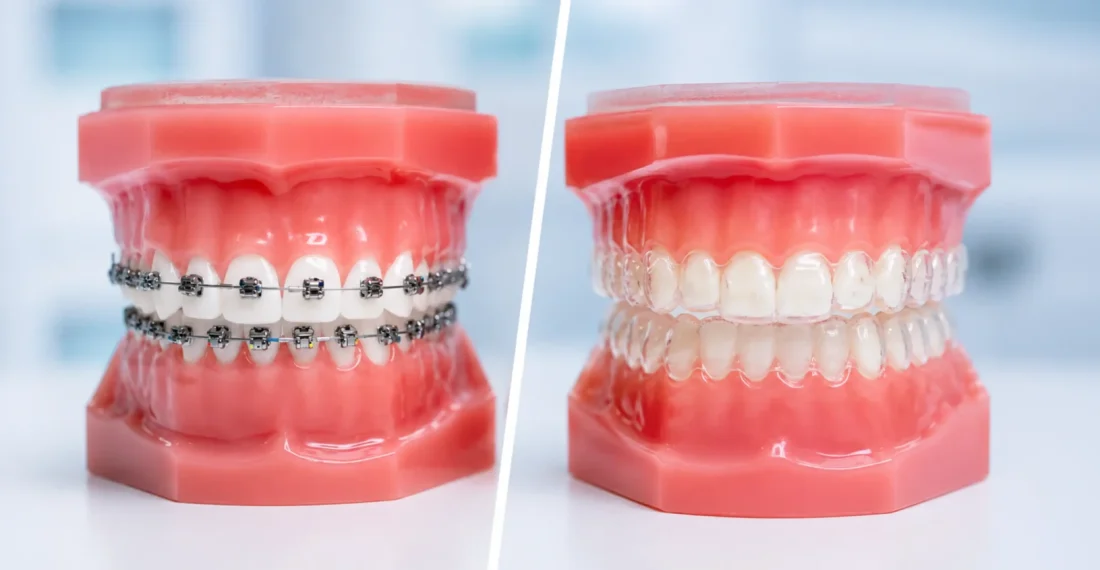
If you have started researching ways to straighten your teeth, you have probably landed on the same question everyone else does: Invisalign or braces?
Both aim to move your teeth into better alignment. Both can genuinely improve your smile, and both have loyal advocates. But the right choice depends on your specific teeth, your lifestyle, and your budget, not on which option is more talked about online. Part of the confusion comes from how differently these treatments are marketed. Cost estimates vary wildly between sources, and treatment time claims are often vague.
This guide sets that aside. It covers how each option actually works, what each tends to cost in Australia, who each suits, and the questions worth raising before you book a consultation. If you already know you are leaning toward a removable option, you can go straight to our clear aligners page for treatment specific information.
Braces are the original, and still one of the most effective, forms of orthodontic treatment. Understanding how they work helps make sense of how they compare to clear aligners later in this guide.
Metal braces use small brackets bonded directly to the front of each tooth. These brackets are connected by a thin archwire, which applies constant, gentle pressure to guide the teeth into their new position over time. The wire is adjusted periodically by a treating clinician throughout the course of treatment, and because the brackets are bonded on, they cannot be removed by the patient at home.
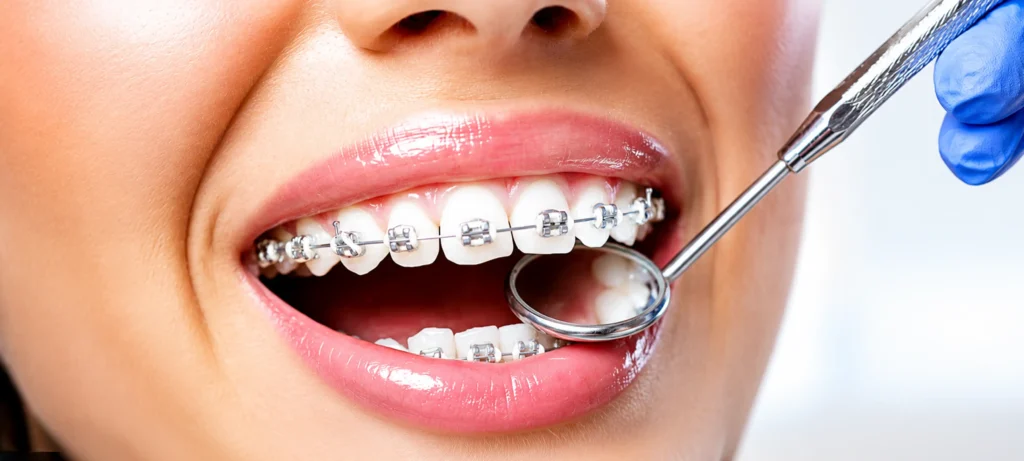
There are a few different styles of braces available, each with different visibility and cost:
Warner Dental’s focus for teeth straightening is clear aligner treatment. For patients who need or prefer traditional braces, the appropriate next step is referral to a specialist orthodontist, who can assess suitability and manage that treatment directly. The Australian Society of Orthodontists is a useful resource for understanding specialist orthodontic care in Australia.
Braces remain suitable for a very wide range of orthodontic cases, including some of the more complex ones. They are often the recommended option for severe crowding, significant bite problems, and cases requiring substantial tooth movement in multiple directions. Braces are commonly used for children and teenagers, but they are equally available and effective for adults.
Clear aligners have become one of the most requested alternatives to traditional braces, largely because they are far less visible during everyday life.
Clear aligners are a series of custom made, transparent plastic trays. Each tray is worn for a set period, generally one to two weeks, before being swapped for the next in the series as your teeth gradually shift into position. For treatment to progress as planned, aligners generally need to be worn for around 20 to 22 hours each day, and they are removed for eating, drinking, brushing, and flossing.
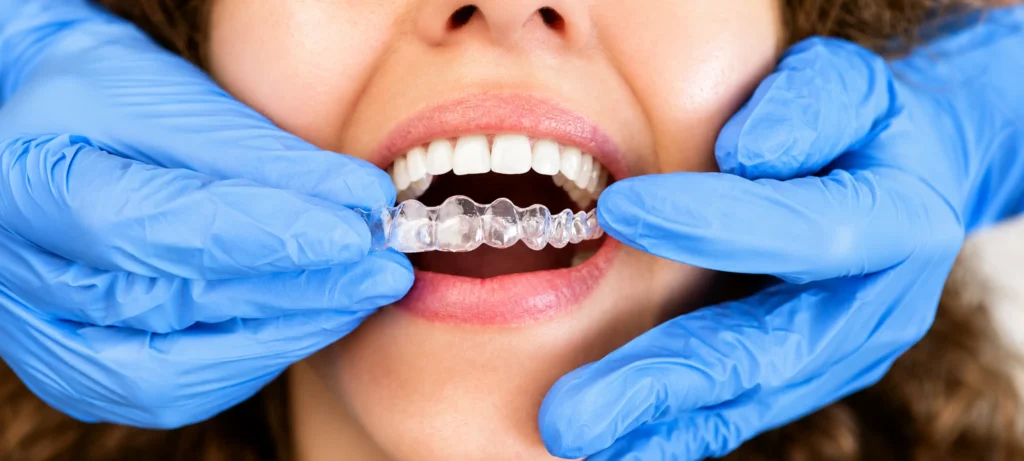
Clear aligners is a general term that covers this style of removable, transparent orthodontic treatment. A number of different clear aligner systems exist on the market, and while they operate on broadly similar principles, they can differ in the material used, the software behind the treatment planning, and how precisely each tray fits.
Warner Dental provides clear aligner treatment using digital scanning and a personalised treatment plan built around your specific teeth. The most suitable approach for your case, including any system specific considerations, is confirmed with you at consultation rather than assumed in advance.
Clear aligners tend to work best for:
More complex orthodontic issues, such as significant bite discrepancies or major tooth rotation, may require traditional braces or referral to a specialist orthodontist. The Australian Dental Association recommends a full clinical assessment before starting any orthodontic treatment, which is standard practice for both aligners and braces.
With the basics of each option covered, here is how they stack up against each other across the factors that matter most to patients.
This is usually the first thing people ask about. Clear aligners are transparent and considerably less noticeable during daily life than either type of braces. Metal braces are visible, and while ceramic braces are less obvious, they are still noticeable at close range. For adults and older teenagers who are self conscious about visible orthodontic treatment, clear aligners offer a genuinely discreet alternative.
Clear aligners are made from smooth plastic, with no brackets or wires to irritate the inside of the mouth. Braces can cause some irritation to the cheeks and gums, particularly in the days following an adjustment appointment. Both treatments involve a period of mild discomfort as the teeth begin to move, which is a normal part of the process. One practical difference is that aligners can be taken out if discomfort becomes significant, whereas braces cannot.
Braces remain the benchmark for complex orthodontic correction and can address a broader range of bite and alignment problems. Clear aligners are highly effective for mild to moderate cases in patients who are good candidates for them. Neither option is universally better than the other. It comes down entirely to the individual case, and a proper clinical assessment is the only reliable way to determine which option can realistically achieve your goals. Treatment should always be provided by practitioners registered with AHPRA.
Clear aligners are removable, which means they can come out for meals, sport, and social occasions, and there are no food restrictions because you simply take them out before eating. Oral hygiene also tends to be easier with a removable appliance, since you can brush and floss normally. The trade off is compliance: aligners only work if they are worn for the recommended hours each day, and not wearing them enough will slow or stop progress. Braces, by contrast, work continuously regardless of how compliant the patient is day to day, since they cannot be removed.
Treatment time for both options varies significantly depending on the complexity of the case. As a general guide, clear aligner treatment for mild to moderate cases typically takes 6 to 18 months, while traditional braces typically take 12 to 36 months depending on complexity. These are general ranges only, and individual results vary considerably. A treating clinician will give you a more specific estimate once your teeth have been properly assessed.
Clear aligners require regular review appointments so a clinician can monitor progress and provide the next set of trays, along with daily cleaning of the aligners themselves. Braces require periodic adjustment appointments throughout treatment, along with careful daily cleaning around the brackets and wires, which can take a bit more effort than cleaning aligners.
Cost is often the deciding factor once appearance and lifestyle preferences have been weighed up, so it is worth understanding what drives the price of each option.

The cost of clear aligner treatment varies depending on the system used, the number of aligners required, and the complexity of the case. As a general guide, a full course of clear aligner treatment in Australia can range from approximately $3,000 to $9,000. Minor or shorter term cases tend to fall toward the lower end of this range. These figures are general only and are not quotes.
Traditional braces also vary by type and complexity:
Cost depends on the complexity of the case, the expected treatment duration, and the treating provider. These are general indicative figures only.
Option | Indicative Cost Range |
Clear aligners (mild to moderate) | $3,000 to $9,000 |
Metal braces | $4,500 to $8,000 |
Ceramic braces | $5,000 to $9,000 |
Lingual braces | $7,500 to $15,000 |
Note: all figures are indicative ranges only. A treating clinician will provide a personalised estimate following assessment.
Orthodontic treatment may attract a partial rebate under some private health extras policies, though the amount varies significantly between funds and levels of cover. Medicare does not cover orthodontic treatment for adults. It is worth checking directly with your health fund before starting treatment to understand what your policy actually covers. Our payment options page outlines what is available at our clinic.
Orthodontic treatment is no longer something adults need to feel is “too late” for. Here is how the decision tends to play out for adult patients specifically.
Discretion is a common priority for working adults, and the ability to remove aligners fits naturally around professional and social commitments. There are no dietary restrictions, since the aligners simply come out before eating, and treatment can generally be planned around your lifestyle rather than the other way around.
Braces may still be the more appropriate option where complex bite issues are present that clear aligners cannot fully address, where the case requires significant tooth rotation or vertical movement, or where an individual is unlikely to consistently wear aligners for the recommended hours each day.
Adults can achieve successful orthodontic outcomes at any age, provided their teeth and gums are healthy enough to support tooth movement. Healthy gums and adequate bone support matter far more than age when it comes to determining suitability. A full dental health assessment is a necessary first step before starting any orthodontic treatment, regardless of the patient’s age.
Aligners and braces are not the only paths to a straighter looking smile, and it is worth understanding where the alternatives fit.
For minor cosmetic irregularities that are not true orthodontic problems, such as a slightly uneven edge or a small gap that does not require tooth movement, dental veneers can sometimes improve the appearance of the teeth without any orthodontic treatment at all. This is not a substitute for orthodontic care where genuine alignment correction is needed, and your dentist will help clarify which pathway is appropriate for your specific situation as part of our broader cosmetic dentistry offering.
Advanced digital planning tools allow some clinics to preview expected treatment outcomes before any work begins. This can be a useful way to understand how your smile may change and to feel more confident in your decision before committing to treatment. You can read more on our digital smile design page.
Warner Dental provides clear aligner assessments and treatment from our clinic in Warner, and we see patients from across North Brisbane and the wider Moreton Bay region, including those looking for a dentist near Bray Park, a dentist near Joyner, and a dentist near Strathpine.
Dr Mona Giri has a special clinical interest in gum health and clear aligners at our practice. At a consultation, we assess whether clear aligners are a suitable option for your teeth, discuss the treatment approach in detail, and provide a personalised estimate based on your individual case. Complex cases that fall outside what clear aligners can achieve may require referral to a specialist orthodontist, which we can help facilitate.
To book a consultation or ask a question, call us on (07) 3882 3200 or visit our clear aligners page to learn more.
Note: Warner Dental provides clear aligner treatment for suitable cases. Traditional braces are managed through referral to a specialist orthodontist. All information in this guide is general in nature, and a clinical assessment is required before any treatment recommendation can be made.
FAQs
Effectiveness depends on the individual case rather than the type of clear aligner system used. Clear aligners generally achieve strong results in mild to moderate cases of crowding, spacing, and minor bite concerns. For more complex bite problems or significant tooth movement, traditional braces are often considered more effective. A clinical assessment is the only reliable way to determine which option will achieve your specific goals.
Clear aligners typically range from approximately $3,000 to $9,000 for a full course of treatment. Metal braces typically range from $4,500 to $8,000, ceramic braces from $5,000 to $9,000, and lingual braces from $7,500 to $15,000. These are general indicative figures only, and a treating clinician will provide a personalised estimate after assessment.
Clear aligner treatment for mild to moderate cases typically takes 6 to 18 months. Traditional braces typically take 12 to 36 months, depending on the complexity of the case. Both figures are general ranges only, and individual treatment time depends on your specific teeth and how well you follow your clinician’s instructions.
Clear aligners can address some mild to moderate bite concerns, but the extent to which they can correct an overbite, underbite, or crossbite depends on the severity of the issue. More significant bite discrepancies often require traditional braces or specialist orthodontic treatment. This is assessed individually at consultation.
Clear aligners can be suitable for teenagers, provided their permanent teeth have come through and they are able to reliably wear the aligners for the recommended hours each day. Compliance tends to be a bigger consideration for younger patients, since the treatment only works if the aligners are worn consistently. A dentist will assess whether a teenager is a good candidate at consultation.
Clear aligners rely on consistent wear, generally 20 to 22 hours per day, to keep treatment on track. If aligners are worn less than this, tooth movement can slow down, stall, or in some cases regress, which may mean a tray no longer fits properly and treatment takes longer than originally planned. Consistent wear is one of the most important factors in a successful outcome.
Both options typically involve some mild discomfort as the teeth begin to move, particularly in the first few days after a new aligner or a brace adjustment. Clear aligners are generally considered more comfortable day to day since there are no brackets or wires to irritate the cheeks and gums, and they can be removed if discomfort becomes significant. Braces cannot be removed, so any irritation needs to be managed until it settles, usually within a few days.
Yes, in most cases. Teeth have a natural tendency to shift back toward their original position after any orthodontic treatment, so a retainer is generally recommended to help maintain the result. Your clinician will advise on the type of retainer and how often it needs to be worn, which can vary depending on your individual case.
Some private health extras policies offer a partial rebate for orthodontic treatment, though the amount varies significantly between funds and levels of cover. Medicare does not cover orthodontic treatment for adults. It is best to check directly with your health fund before starting treatment to understand exactly what your policy includes.
Different clear aligner systems can vary in the plastic material used, the digital planning software behind the treatment, and how precisely each tray is designed to fit. In practical terms, most systems work on the same underlying principle of gradually moving teeth using a series of custom trays. The most suitable system for your case is discussed at your consultation based on your specific teeth and goals.
It is generally recommended to remove clear aligners during contact sport and to wear an appropriate mouthguard instead, to protect both your teeth and the aligners themselves from damage. Speak with your dentist about the best way to manage sport and aligner wear together so your treatment progress is not affected.
This depends on the complexity of your case. Straightforward cases involving mild to moderate crowding or spacing are often suitable for treatment with clear aligners provided by a general dentist. More complex bite issues, significant misalignment, or cases requiring extensive tooth movement are often better managed by a specialist orthodontist. A clinical assessment will help determine the most appropriate pathway, and referral to a specialist is always an option if needed.
Review appointments are generally scheduled at regular intervals throughout treatment so your clinician can monitor how your teeth are progressing and provide your next set of aligners. The exact frequency depends on your treatment plan, but regular reviews are an important part of keeping treatment on track.
Yes, teeth can shift back toward their original position after any orthodontic treatment if a retainer is not worn as recommended. This is a normal biological tendency rather than a sign that the original treatment failed. Wearing a retainer as directed by your clinician is the main way to protect your result over the long term.