
For routine visits, emergencies, and general enquiries
Get Direction

If a dentist has told you that you need a root canal, it is completely normal to pause and wonder whether you really do.
It is a significant procedure, and you want to feel sure before you go ahead.
This guide gives you the honest version: when a root canal is genuinely needed, the signs to look for, your alternatives, what it tends to cost in Australia, and when a second opinion is worth getting.
No scare tactics. Just clear information so you can make a confident decision.
A root canal is generally needed when the soft tissue inside your tooth, called the pulp, becomes infected or badly inflamed.
This usually happens because of deep decay, a crack, or an injury to the tooth.
If the pulp is still healthy, you may not need one at all. That is exactly why an examination matters before any decision is made.
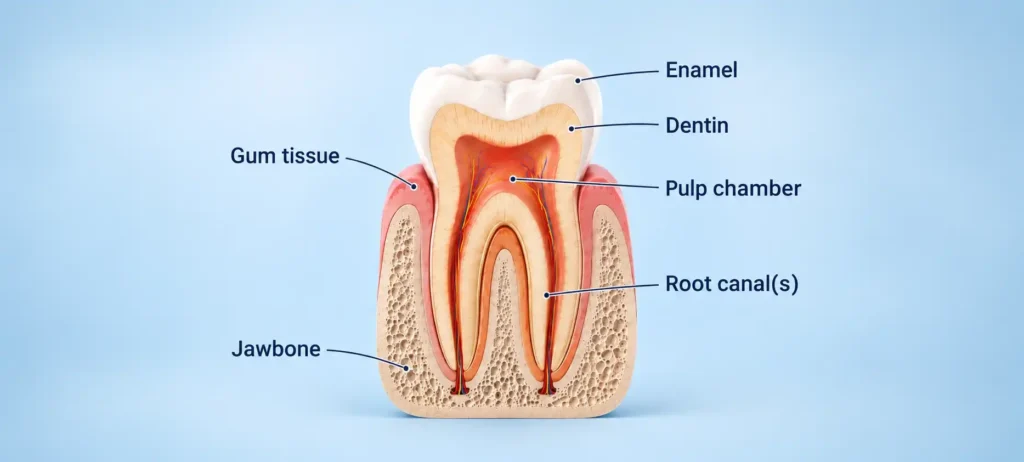
Inside every tooth is a small space filled with soft tissue, nerves, and blood vessels. That is the pulp.
When bacteria reach the pulp, it can become infected or inflamed. Once that damage is severe, the pulp does not recover on its own.
A root canal removes the damaged pulp, cleans the inside of the tooth, and seals it. The aim is to save your natural tooth rather than remove it.
If you want a closer look at what the treatment involves, you can read about modern root canal treatment or the root canal procedure itself.
Symptoms vary from person to person, and some teeth give very little warning.
Still, these are the signs worth paying attention to:
Here is the important part. These signs do not confirm anything on their own.
Only a dentist can tell whether you need a root canal, and that takes an examination and usually an X-ray. If you notice any of these, it is worth getting checked sooner rather than later.
A common worry is whether a smaller treatment would do the job instead.
A filling treats decay that has not reached or infected the pulp. A root canal is for when the pulp itself is involved.
Your dentist works out which one you need from your symptoms, the examination, X-rays, and sometimes a simple pulp test.
If the problem is caught early, a tooth-coloured filling may be all that is needed.
If you are weighing up your options, it helps to know what they actually are.
The main alternative is removing the tooth. This is an option when a tooth cannot be saved.
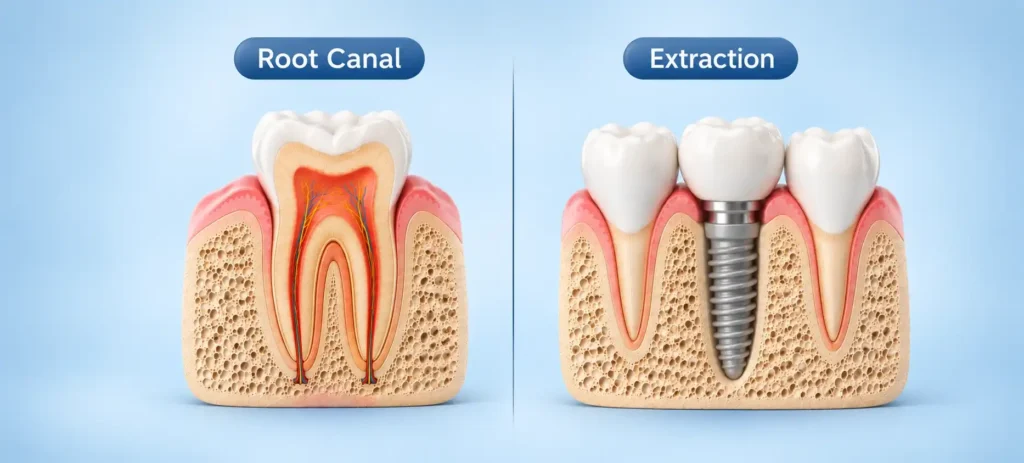
After an extraction, the gap can be restored with an implant, bridge, or denture.
The trade-off is simple to describe. A root canal aims to keep your natural tooth. Extraction removes it, and then you decide how to fill the space. You can compare options for replacing a tooth if that path interests you.
Sometimes inflammation in a tooth is still mild and reversible. In those cases, a dentist may suggest watching the tooth rather than treating it straight away.
This only applies to early situations, and only when your dentist advises it. It is not a safe choice for a tooth that is already infected.
You may have read about natural remedies that claim to avoid a root canal.
To be straight with you: there is no proven natural cure for an infected tooth pulp. Reputable dental bodies do not support these approaches as a replacement for treatment.
Good oral care helps prevent problems. Once the pulp is genuinely infected, it needs proper treatment.
This question comes up a lot, often from older claims that root canals cause illness elsewhere in the body.
That idea, known as the focal infection theory, has been discredited. There is no valid scientific evidence that a properly performed root canal causes disease in the rest of your body.
Root canal treatment is a safe, routine, and long-established procedure. You can read more through healthdirect Australia and the Australian Dental Association.
Root canals have an old reputation that modern treatment has largely left behind.
The treatment is done with local anaesthetic, so the area is numb. Many people find it feels similar to having a filling.
Some soreness for a few days afterwards is normal, and it usually settles with simple pain relief. Depending on the tooth, treatment may take one or more visits.
If dental anxiety is part of why you are hesitating, options like gentle care and happy gas can make the appointment easier.
Cost is often the real reason people pause, so it is worth being clear.
The price varies depending on:
For independent fee ranges, the Australian Dental Association publishes a national dental fee survey. For your tooth specifically, the most accurate figure comes from an assessment and a written quote.
Many teeth need a dental crown after a root canal to protect them, so factor that in. If budget is a concern, it is worth asking about payment options.
For most adults, Medicare does not cover general dental, including root canal treatment, except in limited specific circumstances.
A few things that may help:
You can check current eligibility for children through Services Australia.
Asking for a second opinion is a normal part of making an informed decision about any significant treatment. It is your right as a patient.
A second opinion can be worth it when:
A second opinion often confirms the original plan, and sometimes it surfaces another option worth considering. Either way, you walk in more confident.
It is fair to ask what happens if you do nothing.
An infected tooth does not heal on its own. Over time it can get worse, with risks including increasing pain, a dental abscess, the infection spreading, and eventually losing the tooth.
Waiting can also reduce the chance of saving the tooth. That is the main reason dentists suggest acting while you still have choices.
If you are unsure whether you really need a root canal, you do not have to decide alone.
A proper assessment can tell you what is actually going on, what your options are, and whether keeping or removing the tooth makes more sense for you.
When you are ready, you can get in touch with the Warner Dental team to book an assessment or a second opinion.
This article was prepared by the Warner Dental team and reviewed for general accuracy by Dr Pawan Bista, a registered dental practitioner (Dental Board of Australia registration number DEN0002295134). It reflects publicly available clinical guidance and is intended as general educational information rather than individual advice. You can read more about our dental team, including their qualifications and experience.
Disclaimer: This article is general educational information only, not dental advice, a diagnosis, or a treatment plan. It draws on public guidance from healthdirect Australia and the Australian Dental Association, and no outcome is guaranteed. Only a registered dental practitioner can determine whether you need a root canal and the right treatment after examining you. If you have tooth pain, swelling, or any concerns, please see a dentist.
FAQs
Second opinions are a normal part of deciding on major treatment, and most dentists expect and support them. You can simply say you’d like to understand your options before going ahead, and a good dentist will respect that.
Some cases are clear, but others are borderline, and judgement can reasonably differ between dentists. It isn’t about right or wrong, just a slightly different read of the same tooth. A second opinion helps bring you clarity before you commit.
An infected tooth won’t heal on its own and usually gets worse over time. You could face increasing pain, an abscess, the infection spreading, and eventually losing the tooth. Acting sooner also gives you a better chance of saving it.
Sometimes, but only in early cases where the inflammation is still mild and reversible. In those situations a dentist may suggest monitoring it. Once a tooth is genuinely infected, watching and waiting is no longer safe.
The scary reputation mostly comes from how treatment was done years ago. Today it’s carried out under local anaesthetic, and many people find it feels similar to having a filling. Some mild soreness for a few days afterwards is normal.
Extraction often costs less upfront, so it can seem like the cheaper choice. But replacing a missing tooth later with an implant, bridge, or denture can add up to more overall. It’s worth weighing the full cost with your dentist, not just today’s price.
This worry comes from an old idea called the focal infection theory, which has since been discredited. There’s no valid scientific evidence that a properly performed root canal causes disease elsewhere in your body. It remains a safe, routine treatment.
Anaesthetic is used at each appointment, so a later session isn’t generally more painful than the first. Most discomfort people remember is mild soreness afterwards, not the treatment itself, and it usually fades within a few days.
It’s uncommon, but it can happen. Success rates are high, and a crown placed afterwards helps protect the tooth and lower the risk. If reinfection does occur, retreatment is usually possible to save the tooth.
For most adults, Medicare doesn’t cover general dental, including root canal treatment. Private health extras may contribute depending on your cover, so check your policy. Eligible children may be covered under the Child Dental Benefits Schedule.
Related Blogs