
For routine visits, emergencies, and general enquiries
Get Direction
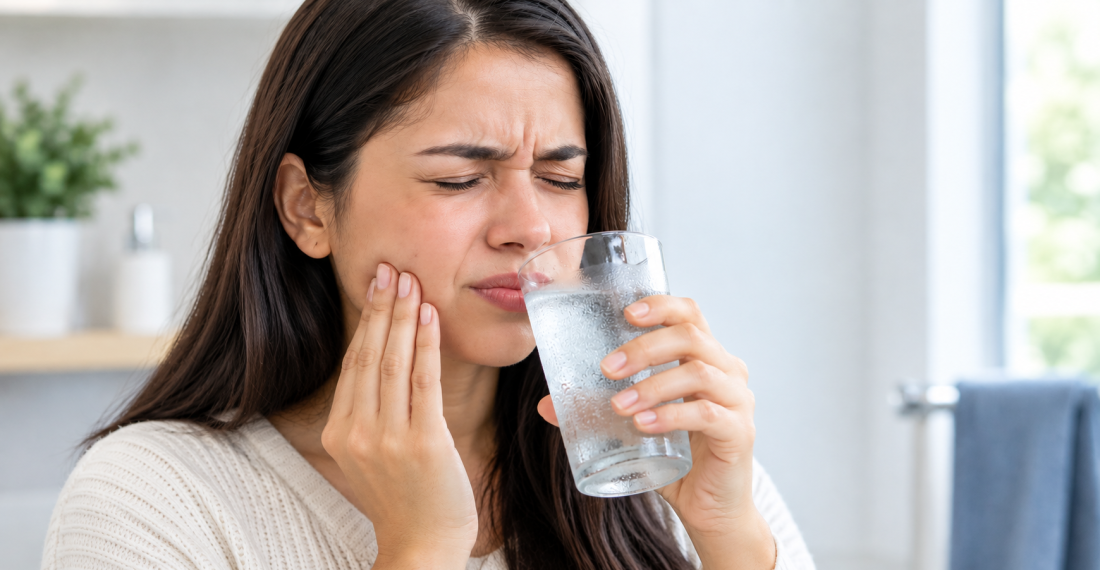
That sharp, sudden twinge when you sip something cold or breathe in on a cool morning is one of the most common dental complaints, and it is usually manageable. Most sensitivity comes down to one thing: the softer layer under your enamel, called dentine, becoming exposed. Below are the real causes of sensitive teeth, what each one means, how to ease and prevent it, and when it is worth seeing a dentist.
One simple idea makes every cause below make sense. Under your enamel sits dentine, a softer layer filled with microscopic tubes that lead to the nerve inside the tooth. While enamel and healthy gums cover the dentine, the nerve stays protected. When enamel wears down or gums recede, those tubes are exposed, and hot, cold, sweet or acidic triggers can reach the nerve and cause a short, sharp pain. Almost every cause of sensitive teeth is just a different way that dentine ends up exposed.
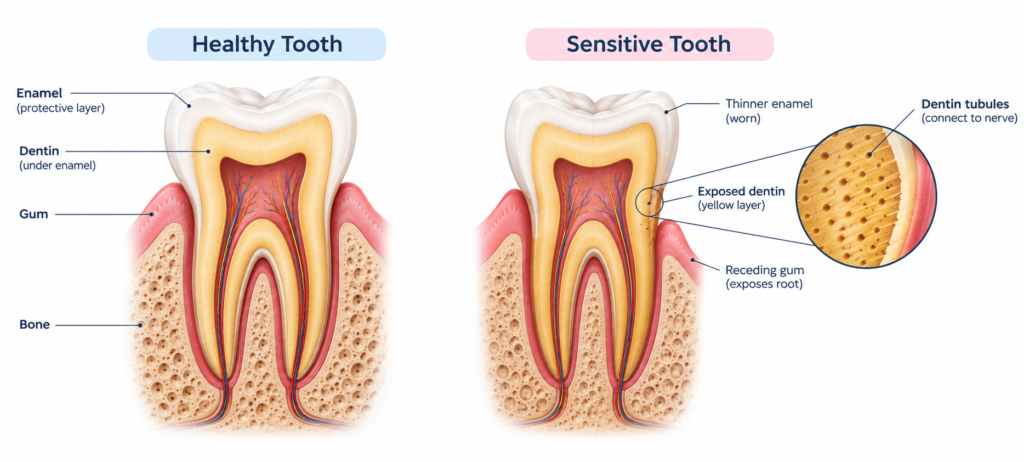
Everyday wear and heavy-handed brushing are among the most common reasons enamel thins. Scrubbing hard or using a firm brush can gradually wear away the protective enamel, and it can also push the gums back, exposing more of the tooth. As the enamel thins, the dentine beneath reacts more to cold, heat and sweetness. Switching to a soft-bristled brush and a gentle technique protects the enamel you still have, which is the simplest way to keep sensitivity from getting worse.
Acid softens and dissolves enamel, which over time leaves the dentine exposed. Frequent acidic foods and drinks, such as citrus, soft drinks, sports drinks and wine, are common culprits, and acid can also come from the stomach through reflux or frequent vomiting. This process is called dental erosion, and it differs from decay because no bacteria are involved. Cutting back on acidic drinks and not brushing straight after them helps protect the surface. Ongoing wear is worth assessing, which is where enamel erosion and tooth wear care comes in.
When gums recede, they uncover the tooth root, which has no enamel to protect it, so it is naturally more sensitive. Recession can follow years of hard brushing, and it is often linked to gum disease. Because the root reacts quickly to cold, sensitivity right at the gum line is a common sign. If your gums look like they are pulling back, or they bleed too, it is worth reading about receding or bleeding gums and having your gum disease risk checked, since caring for the gums often eases the sensitivity.
Sometimes sensitivity is an early sign of a cavity. As decay works through the enamel and into the dentine, the tooth can start to react to cold, heat and sweet foods, and this is often felt in one particular tooth. Unlike the general sensitivity of worn enamel, a cavity tends to stay in the same spot and may worsen over time. If one tooth is reacting more than the rest, it is worth having it checked for tooth decay so it can be caught early.
A crack or chip can expose the sensitive inner layers of a single tooth and let temperature changes and bacteria reach the nerve. Cracks are not always visible, and the sensitivity may come and go, often with a sharp twinge when biting down or releasing. Because the discomfort usually centres on one tooth, this is a common reason a single tooth feels sensitive. A cracked or chipped tooth is worth having assessed, since a small crack is simpler to manage early.
It is common for a tooth to feel more sensitive for a while after a filling, crown or other dental work, especially to cold. The tooth and nerve are simply settling after being worked on, and this kind of sensitivity is usually temporary, often easing over a few weeks. It helps to avoid very hot or cold foods on that side for a few days. If the sensitivity is sharp, lasts well beyond a few weeks, or gets worse rather than better, it is worth letting your dentist know so they can check the tooth.
Grinding or clenching, often during sleep, puts heavy force on the teeth and can gradually wear through the enamel, exposing the dentine underneath. This is known as bruxism, and many people do not realise they do it. Along with sensitivity, signs can include a sore jaw, headaches or flattened-looking teeth. If grinding is suspected, night guards for grinding are one option a dentist may discuss to help protect the teeth from further wear.
Short-term sensitivity is a well-recognised side effect of teeth whitening. Whitening products can temporarily draw minerals from the enamel and irritate the nerve, which makes the teeth react to cold for a time. This usually settles within a few days once whitening stops. Spacing out treatments and using products as directed helps. If whitening leaves your teeth persistently sore, it is worth pausing and speaking with your dentist rather than continuing.
Fillings do not last forever. Over the years, an old filling can wear down, chip, or develop a tiny gap at its edge, which can expose the dentine or let triggers seep underneath. The result is often renewed sensitivity in a tooth that had been comfortable for a long time. If an older filling seems to be behind the sensitivity, a dentist can check whether it needs repair or replacement before decay has a chance to develop beneath it.
Some people notice mild sensitivity for a short time after a professional scale and clean, particularly if there was tartar built up near the gum line. Removing that build-up can briefly leave the surface underneath more reactive to cold. This is normal and usually settles within a few days. Gentle brushing with a soft brush in the meantime helps, and the sensitivity should fade as the teeth settle.
Occasional, mild sensitivity is common and often eases with gentle care. It is worth booking a dental assessment if any of the following apply:
Sensitivity that stays in one tooth or comes with pain can point to something like a cavity or a crack that is easier to manage when caught early. If you are unsure, you can read about our approach to sensitive teeth treatment and have it checked.
A visit for sensitivity is usually straightforward and gentle. The dentist will typically ask when the pain started, what sets it off, and whether it is one tooth or several, then examine your teeth and gums. They may check for cavities, cracks, worn enamel, gum recession or a worn filling, and take X-rays where these help. From there, they can explain what is likely causing it and talk through suitable options based on the cause. If you feel nervous about visiting, here is your first dental visit explained.
A few everyday habits help protect enamel and gums and reduce the chance of sensitivity building up:
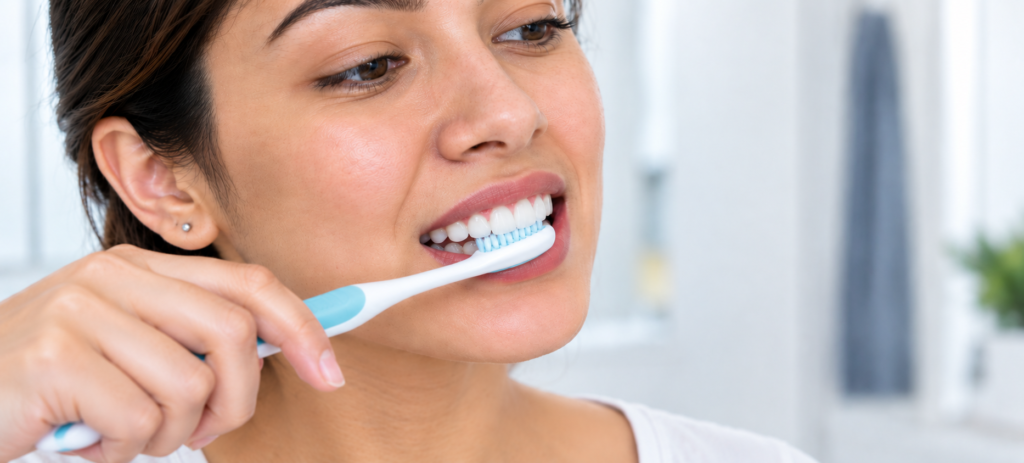
These habits help protect against everyday sensitivity, but they cannot fix a cavity, a crack, or gum recession. If sensitivity lasts or centres on one tooth, that needs a dentist to find and address the cause.
At Warner Dental in Brisbane, our team can assess what is causing your sensitivity and talk through the options suited to your situation, whether that involves protecting worn enamel, caring for the gums, or addressing a cavity or crack. If your teeth have been sensitive, you are welcome to read about our approach to sensitive teeth treatment, or book an appointment to have them checked.
This article was prepared by the Warner Dental team and reviewed for general accuracy by Dr Pawan Bista, a registered dental practitioner (Dental Board of Australia registration number DEN0002295134). It reflects publicly available clinical guidance and is intended as general educational information rather than individual advice. You can read more about our dental team, including their qualifications and experience. Last updated: September 2026.
Disclaimer: This article is general educational information only, not dental advice, a diagnosis, or a treatment plan. It draws on public guidance from healthdirect Australia and the Australian Dental Association, and no outcome is guaranteed. Only a registered dental practitioner can determine the cause of tooth sensitivity and the right treatment after examining you. If your teeth stay sensitive or you have any concerns, please see a dentist.
FAQs
CDBS is a Commonwealth benefit that helps cover the cost of basic dental services for eligible children. It is administered through Medicare in partnership with Services Australia and is one of the few areas where Commonwealth funding goes directly toward dental care rather than general medical services.
A child needs to be aged 0 to 17 for at least one day of the calendar year, eligible for Medicare on the day of the dental service, and part of a family that receives an eligible government payment at some point that year, such as Family Tax Benefit Part A, Parenting Payment, Youth Allowance, or Carer Payment. Eligibility is reassessed every calendar year rather than granted permanently.
A child needs to be aged 0 to 17 for at least one day of the calendar year, eligible for Medicare on the day of the dental service, and part of a family that receives an eligible government payment at some point that year, such as Family Tax Benefit Part A, Parenting Payment, Youth Allowance, or Carer Payment. Eligibility is reassessed every calendar year rather than granted permanently.
The most common reasons are that no eligible government payment was received that calendar year, the child is not enrolled in Medicare, or a previous two-year benefit period has ended without a new qualifying payment starting a fresh cycle. Eligibility can change from year to year, so a child who does not currently qualify may become eligible again later.
CDBS provides a capped benefit amount per eligible child over a two-year period, not a fresh amount every single year. The cap is set and indexed annually by Services Australia, and the exact figure can vary depending on when a child’s two-year cycle began. For the current amount, check directly with Services Australia or ask your dental practice to confirm it for you.
CDBS generally covers basic dental services including check-ups, x-rays, cleaning, fillings, some root canal treatment, extractions, partial dentures, and fissure sealants, provided the treatment is clinically necessary.
CDBS does not cover orthodontic treatment such as braces or clear aligners, cosmetic dental work, or any dental service provided in a hospital setting. These need to be planned and paid for separately.
Related Blogs