
For routine visits, emergencies, and general enquiries
Get Direction

If your gums bleed when you brush or floss, you are not alone, and in most cases it is not an emergency. Bleeding gums are usually an early, treatable sign of gum inflammation, most often caused by plaque along the gum line. Around 1 in 2 people experience gingivitis at some stage in their lives. Below are the common causes of bleeding gums, what each one means, how to prevent them, and when it is worth seeing a dentist.
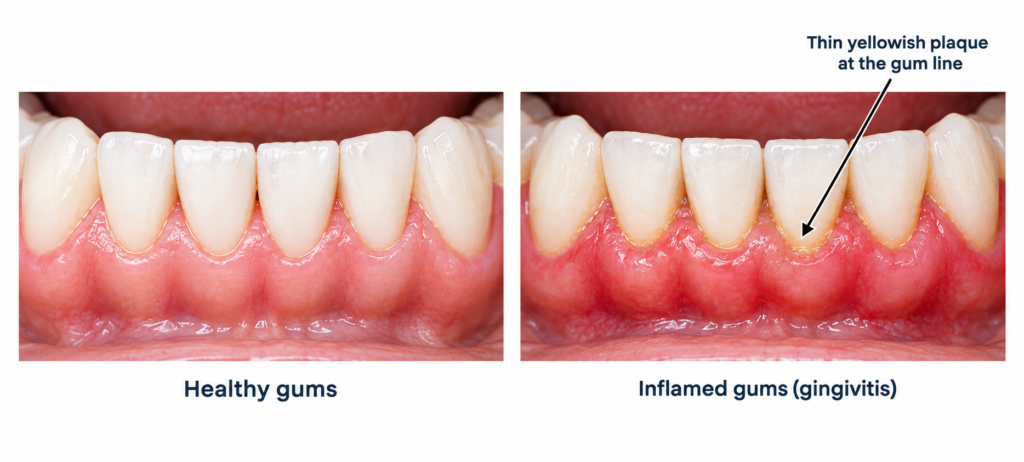
Most bleeding gums come down to plaque. Plaque is a sticky film of bacteria that builds up along the gum line, and when it is not cleaned away it irritates the gums, which may then bleed or swell. This early stage is called gingivitis, and it is very common. The good news is that it is usually reversible with consistent home care and a professional cleaning where needed. Healthy gums generally do not bleed with gentle cleaning, so bleeding gums are a useful early warning to act on.
Aggressive brushing is a frequent and easily fixed cause. Scrubbing hard, or using a medium or firm brush, can graze and irritate the gum tissue and make it bleed, even when there is no gum disease. Switch to a soft-bristled brush, hold it at a gentle angle to the gum line, and let the bristles do the work without pressure. If bleeding continues after you have softened your technique for a week or two, the cause is more likely inflammation than brushing, and it is worth having it checked.
If your gums bleed when you floss, it is often because they are already inflamed, not because flossing is harming them. Plaque collects between the teeth where a brush cannot reach, and when you first start flossing, or return to it after a break, that inflamed tissue tends to bleed. The important thing is not to stop. Even when gums are bleeding or inflamed, it helps to keep brushing and flossing gently, because this gradually removes plaque and improves symptoms, often within a week or two. Our daily oral hygiene tips cover technique in more detail.
Hormones can make gums more reactive to plaque, which is why bleeding gums are common in pregnancy, puberty and around menopause. In pregnancy, a rise in progesterone increases blood flow to the gum tissue, so gums can become more sensitive and more likely to bleed when you brush or floss. This is often more noticeable during the second trimester. It is usually manageable with gentle, consistent cleaning, and routine dental care is still recommended during pregnancy.
Certain nutritional deficiencies can contribute to bleeding gums, most notably a lack of vitamin C or vitamin K. A severe, prolonged shortage of vitamin C is known as scurvy. In Australia these deficiencies are far less common than plaque-related bleeding, so for most people diet is unlikely to be the main cause. Still, if your gums bleed and you are unsure why, a balanced diet supports gum health, and a dentist or doctor can help work out what is behind ongoing bleeding.
Certain medications can make gums bleed more easily. Blood-thinning medicines, such as anticoagulants and antiplatelet drugs, are common examples, and some other medications can play a part too. If you take one of these and notice more bleeding, do not stop or change your medication on your own. Mention it to your dentist and your prescribing doctor, who can take it into account and advise you safely.
Smoking is a serious risk factor for gum disease, but it works in a way that surprises many people. Because nicotine reduces blood flow to the gums, smokers sometimes bleed less, even when gum disease is present. In other words, smoking can mask the warning signs rather than remove the problem. So a lack of bleeding is not proof of healthy gums if you smoke, which makes regular dental checks especially important. Current evidence suggests vaping is also detrimental to gum health.
Dental appliances that rub or trap plaque can cause localised bleeding. A denture, plate or orthodontic appliance that sits unevenly may irritate the gum in one area, and it can also make certain spots harder to clean, letting plaque gather. If you think an appliance is the culprit, it is worth having the fit reviewed rather than putting up with the discomfort, since a small adjustment often solves it.
Sometimes bleeding gums reflect what is happening elsewhere in the body. Diabetes, for example, can affect how the gums respond to plaque and how well they heal. This is one reason gum health and general health are connected, and why keeping up both dental and medical care matters. Bleeding gums alone do not diagnose any condition, but ongoing symptoms are a sensible prompt to look after the bigger picture with your dentist and doctor.
If early gum disease is left untreated, it can progress to a more serious stage. Persistent inflammation can develop into periodontitis, which affects not just the gums but the bone that holds the teeth in place, and at that stage it may be irreversible. Warning signs beyond bleeding include receding gums, persistent bad breath, and loose teeth. This is the main reason not to ignore bleeding gums. Early gum disease management aims to control the problem before lasting damage occurs.
If your gums seem to bleed for no reason, the cause is still usually plaque or technique that is easy to miss. Less commonly, bleeding gums can be linked to blood-clotting disorders, such as thrombocytopenia or haemophilia, and in rare cases to conditions like leukaemia. These are uncommon, and this is not a diagnosis. The practical takeaway is simple: bleeding that is unexplained, heavy, or does not settle with good oral care is a clear reason to get assessed rather than wait and worry.
Occasional bleeding when you start a cleaning routine is common and usually settles on its own. It is worth booking a dental assessment if any of the following apply:
Keep in mind that early gum disease is often painless, so it is easy to overlook. Acting on the warning signs early usually means simpler care.
A visit for bleeding gums is usually straightforward and gentle. The dentist will typically ask about your symptoms, your medical history and any medications, then examine your gums and teeth. To check the health of your gums, they may gently measure the small spaces around each tooth and take X-rays where these are helpful. This shows whether the inflammation is limited to the gums or involves the deeper supporting structures. From there, they might recommend a professional clean to remove plaque and tartar, along with tailored advice on brushing and flossing, and they will explain any further care if it is needed. If you feel anxious about visiting, here is your first dental visit explained.
Most bleeding gums can be prevented by keeping plaque under control day to day. A few simple habits make the biggest difference:

Good home care removes soft plaque, but once plaque hardens into tartar it can only be removed by a professional clean, which is why regular visits matter alongside your daily routine.
At Warner Dental in Brisbane, our team can assess what is causing your gums to bleed and recommend care suited to your situation, from a professional clean to ongoing gum care where it is needed. If your gums have been bleeding, you are welcome to read about our approach to bleeding gums treatment, or book an appointment to have them checked.
This article was prepared by the Warner Dental team and reviewed for general accuracy by Dr Pawan Bista, a registered dental practitioner (Dental Board of Australia registration number DEN0002295134). It reflects publicly available clinical guidance and is intended as general educational information rather than individual advice. You can read more about our dental team, including their qualifications and experience. Last updated: September 2026.
Disclaimer: This article is general educational information only, not dental advice, a diagnosis, or a treatment plan. It draws on public guidance from healthdirect Australia and the Australian Dental Association, and no outcome is guaranteed. Only a registered dental practitioner can determine the cause of bleeding gums and the right treatment after examining you. If your gums keep bleeding or you have any concerns, please see a dentist.
FAQs
No. It is best to keep brushing and flossing gently, because stopping lets plaque build up, which usually makes the inflammation and bleeding worse. Use a soft-bristled brush and a light touch. If the bleeding has not eased within a week or two, book a check-up.
For most people, plaque-related bleeding improves with consistent, gentle brushing twice a day, daily flossing, and a warm salt-water rinse for comfort. Home care cannot remove hardened tartar or treat an underlying infection, so if bleeding continues, a professional assessment and clean may be needed.
When the cause is plaque, bleeding often settles within one to two weeks of improved, gentle oral hygiene. If your gums are still bleeding after that, or the bleeding is getting worse, it is worth having them assessed rather than waiting longer.
Deficiencies in vitamin C and vitamin K are recognised causes, and a severe lack of vitamin C is known as scurvy. In Australia these are far less common than plaque-related bleeding, so a deficiency is one possibility to consider rather than the likely cause for most people. A dentist or doctor can help identify what is behind ongoing bleeding.
Bleeding, swollen gums are common in pregnancy. Hormonal changes increase blood flow to the gum tissue, making gums more sensitive and more likely to bleed when brushing or flossing, often more noticeably in the second trimester. Gentle, regular cleaning helps, and routine dental care is still recommended during pregnancy.
Bleeding in a single spot often points to something localised, such as trapped food, plaque along one part of the gum line, a brushing or flossing habit, or irritation from a filling or appliance. If that area keeps bleeding despite gentle cleaning, have a dentist take a look to find the cause.
Occasional bleeding when you start a cleaning routine is common and usually settles. See a dentist if bleeding lasts beyond one to two weeks of good hygiene, is heavy or happens for no clear reason, or comes with swollen, receding or painful gums or loose teeth. Because early gum disease is often painless, acting on these signs early is sensible.
Gum health is connected to general health, and untreated gum disease has been associated with conditions such as diabetes and heart disease. This is an association rather than proof that one causes the other, but it is another good reason not to ignore ongoing bleeding.
Related Blogs