For routine visits, emergencies, and general enquiries
Get Direction
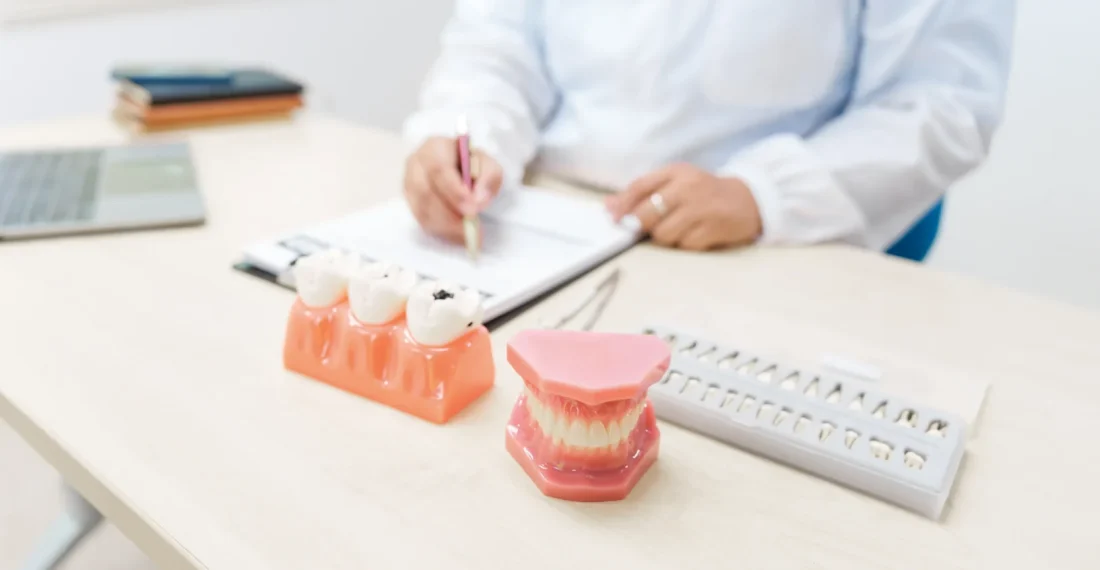
Losing most or all of your teeth changes more than the way a smile looks. It affects how comfortably you can eat, how clearly you speak, and how confident you feel in everyday situations. For people who find conventional dentures loose, uncomfortable, or limiting, implant supported dentures are one option worth understanding properly before making any decisions.
This guide explains how implant supported dentures work, who might be a suitable candidate, what the treatment generally involves, what influences the cost, and how the option compares with the alternatives. It is written for people at the research stage, well before any consultation, so you can walk into an appointment with informed questions rather than a decision already made.
Implant supported dentures, also called overdentures or implant retained dentures, are removable dentures that attach to dental implants placed in the jawbone. The implants act as anchor points, which helps the denture stay more stable in use than a conventional denture that simply rests on the gum.
This is different from a fixed implant restoration. With options such as dental implants Warner or an All-on-4 bridge, the teeth are fixed in place and only removed by a practitioner. An implant supported denture, by contrast, is taken out by the patient for cleaning and overnight soaking. It clips or locks onto the implants using an attachment mechanism such as locator abutments or a bar.
You may have heard these described informally as snap in dentures in Brisbane. That is a patient term rather than a clinical one, and the exact mechanism varies depending on how many implants are placed and which attachment system is chosen.
The main features that set them apart from conventional dentures include:
Implant supported dentures are not right for everyone, and suitability is always determined at a consultation. In broad terms, they are an option that people in the following situations sometimes explore:
A loose lower denture is one of the more common reasons people start looking into a denture implant solution, and patients who are managing day to day with full and partial dentures but struggling to eat comfortably are among those who enquire most often.
It is worth being clear that this treatment is not suitable for every patient. A range of medical conditions and medications can affect suitability, and individual risk factors are assessed carefully before anything is recommended. A practitioner will go through all of this with you at the first appointment.
Implant treatment is not a single visit. It unfolds across several stages over a number of months, and the exact timeframe and number of appointments depend on your individual circumstances. The overview below is general only.
The first appointment involves a full clinical examination, a review of your medical and dental history, and a conversation about your goals and what you hope to achieve. Imaging, usually including a cone beam CT scan for a three-dimensional view of the bone, is generally needed before any treatment plan can be finalised. Guided dental implant surgery using digital planning is one approach that supports precise implant placement.
Once the assessment is complete, the practitioner will talk through the options suited to your situation. This covers the number of implants recommended, the attachment system, the type of denture, and the likely timeframe and cost. If implants are not the most appropriate path for you, alternatives are always discussed openly.
The implants are placed into the jawbone under local anaesthetic, and sedation options may be available for people with dental anxiety. An overdenture is typically supported by two to four implants, though this varies from case to case. Some soreness, swelling, and mild discomfort in the days after surgery is normal and is usually managed with over the counter pain relief, taken as directed.
After placement, the implants need time to integrate with the surrounding bone, a process known as osseointegration. This healing phase usually takes several months. During this time, most patients continue to wear a temporary or existing denture, and your practitioner will advise on what is suitable to wear while you heal.
Once the implants have integrated, the denture is fitted and adjusted so it attaches securely to the implant anchors. A few follow-up appointments are usually needed to fine-tune the fit, comfort, and function before everything settles.
There is no single price for implant supported dentures, because the cost depends heavily on your individual situation. At the research stage, the most useful thing to understand is not a figure but what shapes the cost, so you know what your treatment plan will be based on. An itemised treatment plan with exact figures is always provided after a clinical assessment and before any treatment begins.
The main factors that influence the overall cost include the number of implants required, the attachment system used, the materials and complexity of the custom-made denture, and whether any additional procedures are needed.
The number of implants needed varies from case to case and is one of the larger influences on cost. The attachment system, such as locator abutments or a bar, also varies in complexity, and the most suitable choice is determined at assessment.
The denture that attaches to the implants is custom made, and this is separate from the implant surgery. Its cost depends on the materials chosen and the complexity of fabrication.
Some patients need bone grafting before implants can be placed, where bone volume is not yet sufficient. This adds to both the timeframe and the overall cost. Not everyone needs it, and whether you do is determined at assessment.
Some private health policies that include major dental cover may provide a partial rebate toward implant treatment. The amount differs a great deal between funds and policies, so it is worth checking directly with your fund before proceeding. The Australian Dental Association offers general guidance on dental costs and insurance.
People researching this treatment almost always want to know how it stacks up against the alternatives. The overview below is general, and the right choice for any individual depends entirely on clinical factors assessed at a consultation.
A conventional denture rests on the gum and relies on suction or adhesive to stay in place. An implant supported denture is anchored to implants, which can offer improved stability when eating and speaking. The trade-off is straightforward: conventional dentures involve no surgery and a lower upfront cost, while implant supported dentures involve a surgical procedure and a higher initial outlay.
All-on-X or All-on-4 is a fixed full-arch implant restoration. Unlike an implant supported denture, it is not removed by the patient and is cleaned in the mouth much like natural teeth. All-on-4 typically uses more implants and generally involves a higher overall cost. Whether it is more or less appropriate than an overdenture depends on bone volume, clinical needs, and personal preference, and both options call for thorough assessment before any recommendation is made.
For people with more complex needs affecting several aspects of bite function and appearance, full mouth rehabilitation may be discussed as part of treatment planning. This is always assessed on an individual basis.
If you are weighing up implant supported dentures, the only reliable way to know whether they suit you is a clinical assessment that includes imaging. A practitioner can examine your mouth, review your general health, and talk through whether implant supported dentures, a conventional denture, or a fixed full-arch option makes the most sense for your situation.
Warner Dental in North Brisbane provides implant assessments and treatment through registered dental practitioners and welcomes new patients. You can read more on the implant supported dentures service page, or visit the dentist in Warner homepage to learn about the practice. For information about public dental access in Queensland, see Queensland Health public dental services.
Note: All information here is general in nature. Implant treatment requires a thorough clinical assessment, including imaging, before any recommendation can be made. Outcomes vary from one person to another and no result can be guaranteed. Treatment is provided by registered dental practitioners only.
FAQs
The number varies with the clinical situation, the jaw being treated, and the attachment system used. A lower-jaw overdenture is commonly supported by two implants, while the upper jaw may need more because of differences in bone density. Some cases call for three or four. The exact number is determined after assessment and imaging, so there is no single answer that applies to everyone.
Implant supported dentures are generally more stable during eating than conventional dentures, which may allow a wider range of foods. That said, eating ability depends on individual outcomes, the healing process, and how the fit holds up over time. No specific dietary outcome can be guaranteed, and your practitioner will discuss realistic expectations for your situation at consultation.
The placement is done under local anaesthetic, so the procedure itself should not be painful. Some soreness, swelling, and discomfort in the following days is common and is usually managed with over the counter pain relief as directed. Sedation options may be available for people with dental anxiety. Experiences vary, so it is worth discussing any concerns about pain or anxiety with your practitioner beforehand.
Once integrated, the implants themselves can last many years with appropriate care and regular reviews. The denture component is subject to normal wear and will need maintenance, relining, or replacement over time. The attachment parts, such as locator clips, also wear and need periodic replacement. Regular reviews matter for monitoring both the implants and the denture, and your practitioner will recommend a suitable schedule.
Insufficient bone is one reason a patient may be assessed as unsuitable at a particular point in time. In some cases, bone grafting can build up enough volume to support implants, though it adds time and cost, and not everyone is a candidate for grafting either. If you have been told elsewhere that implants are not possible, a second opinion with a practitioner experienced in implant dentistry may be worthwhile.
Snap in dentures is an informal term some patients use for implant supported dentures that use a locator or ball attachment, allowing the denture to click onto the implants. It is not a clinical term, and different practitioners may use it loosely. Implant supported dentures and implant retained dentures are the broader clinical terms covering various attachment systems. The most appropriate system for you is determined at consultation, based on clinical assessment.
Sometimes an existing denture can be modified to attach to newly placed implants rather than making a completely new one. Whether this is appropriate depends on the condition, age, and fit of the current denture, as well as the implant positions. It is assessed case by case, is not always clinically appropriate, and cannot be confirmed without examining the denture and the implant placement.