

A stainless steel crown is a durable protective cap placed over a damaged or weakened tooth. In children’s dentistry, it is commonly used to restore baby teeth that cannot be repaired with a simple filling.
To answer clearly, a stainless steel crown covers the entire tooth surface to protect it from further decay, restore function, and maintain space for the permanent tooth.
In pediatric dentistry, stainless steel crowns are widely used because they are strong, reliable, and effective in managing extensive decay in developing teeth.
Children may require pediatric dental crowns when a tooth has significant decay or structural damage.
Common reasons include:
A pulpotomy is a treatment used when tooth decay reaches the inner pulp but infection has not spread to the root. After removing the infected portion, the tooth is restored with a stainless steel crown to provide long-term protection.
This approach helps preserve the baby tooth so it can continue functioning until it naturally falls out.
Stainless steel crowns are a standard solution in Child-friendly restorative care because they provide reliable coverage for teeth that may otherwise be difficult to restore.
Benefits include:
Unlike a traditional dental cap crown used for adults, stainless steel crowns are pre-shaped and adjusted to fit a child’s tooth efficiently. This allows dentists to complete treatment quickly, which can be helpful for younger patients.
The goal is to restore the tooth while keeping the experience comfortable and manageable.
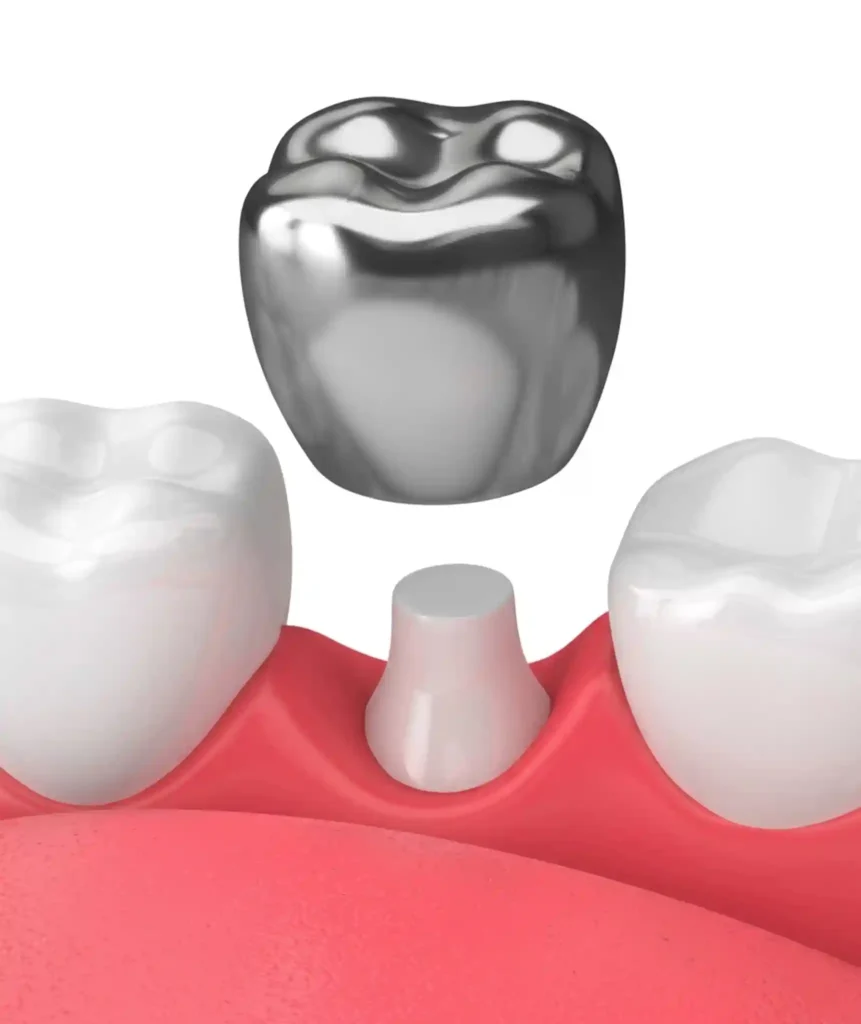
The procedure for placing a stainless steel crown is typically straightforward.
Step by step:
Once placed, the crown functions like a natural tooth surface, allowing normal chewing and protecting the remaining structure.
Many children adapt quickly and are able to return to normal eating soon after treatment..
Parents often ask about the price of dental caps when treatment is recommended.
Costs can vary depending on factors such as:
While pricing varies, stainless steel crowns are generally considered a cost-effective solution compared to repeated fillings or untreated decay that may require more extensive care later.
A stainless steel crown plays an important role in protecting damaged baby teeth and supporting healthy dental development. By restoring strength and function, pediatric dental crowns help children maintain proper chewing, speech, and spacing for permanent teeth.
When combined with regular check-ups and preventive care, this treatment supports long-term oral health and comfortable dental experiences for young patients.
Outcomes vary between patients, and all treatments carry risks and possible complications.
If your child has a damaged or decayed tooth, contact Warner Dental in Warner, Brisbane to book a consultation and discuss whether a stainless steel crown may be appropriate.
Protect your smile with regular care at Warner Dental.
Stainless steel crowns are used when decay is too extensive for a filling, providing full coverage and long-term protection for baby teeth until they naturally fall out.
Large cavities weaken the remaining tooth structure, making fillings more likely to fail. A stainless steel crown protects the entire tooth surface and prevents further damage. In pediatric dentistry, this approach improves durability and reduces the need for repeat treatments. Pediatric dental crowns are particularly useful for molars that experience strong chewing pressure and are more prone to significant decay.
Option A: Choose crowns for large cavities to reduce repeat procedures.
Option B: Ask your dentist if a crown offers better long-term protection than a filling.
A pulpotomy removes infected pulp tissue inside a baby tooth while preserving the healthy root, allowing the tooth to remain functional and be protected with a stainless steel crown.
When decay reaches the pulp but has not affected the root canals, a pulpotomy removes the damaged tissue while preserving the remaining healthy structure. The tooth is then sealed and covered with a crown to prevent bacteria from re-entering. This treatment helps maintain the tooth’s role in chewing and guiding permanent teeth into position.
Treat infection early to avoid extraction, and follow recommended follow-up appointments after treatment.
Yes, stainless steel crowns are widely used in pediatric dental care to help restore baby teeth affected by extensive decay or structural damage.
Stainless steel crowns have been used in children’s dentistry for decades and are designed specifically for temporary teeth. They provide reliable protection until the tooth naturally falls out. Their durability makes them especially suitable for active children who may struggle to maintain delicate restorations like large fillings.
Ask your dentist how commonly this treatment is used for children with similar levels of tooth decay. This helps you understand to what extent it is considered a standard approach.
The price of dental caps varies depending on the number of teeth treated, whether pulpotomy is required, and individual clinic fees.
Although costs differ between practices, stainless steel crowns are generally considered cost-effective due to their durability and reduced likelihood of failure. Treating decay early often prevents more complex procedures later. Parents should discuss treatment options and pricing with their dentist to understand the recommended plan.
Request a detailed treatment estimate beforehand, and ask about available payment plans if multiple crowns are required.
If a stainless steel crown becomes loose, it should be checked by a dentist as soon as possible. Although uncommon, a loose crown could detach and potentially be swallowed.
If a stainless steel crown becomes loose, see a dentist as soon as possible. While crowns can occasionally come off, it is generally quite rare for a child to swallow it.
Stainless steel crowns are securely cemented and typically stay in place until the baby tooth naturally falls out. However, they may occasionally loosen due to wear, chewing pressure, or natural changes as the baby tooth prepares to shed. If a crown becomes loose, it may move while eating or brushing. In rare cases, the crown could come off completely and be accidentally swallowed, which is generally not harmful but should still be discussed with a dentist.
If you notice the crown moving or your child reports discomfort, schedule a dental visit promptly so the crown can be adjusted or replaced. If the crown falls out, keep it if possible and contact your dentist for advice. If you believe your child swallowed the crown, inform the dentist and monitor your child for any unusual symptoms.
Routine examinations and professional cleaning for children to monitor oral development and maintain healthy teeth and gums.
Preventive treatments such as fluoride applications and oral hygiene education to help reduce the risk of tooth decay.
Custom appliances used to hold space for permanent teeth when baby teeth are lost prematurely.
Durable crowns used to restore and protect severely decayed or damaged baby teeth.
Eligible children may access dental care through the Child Dental Benefits Schedule (CDBS), which may cover certain dental services depending on eligibility.