
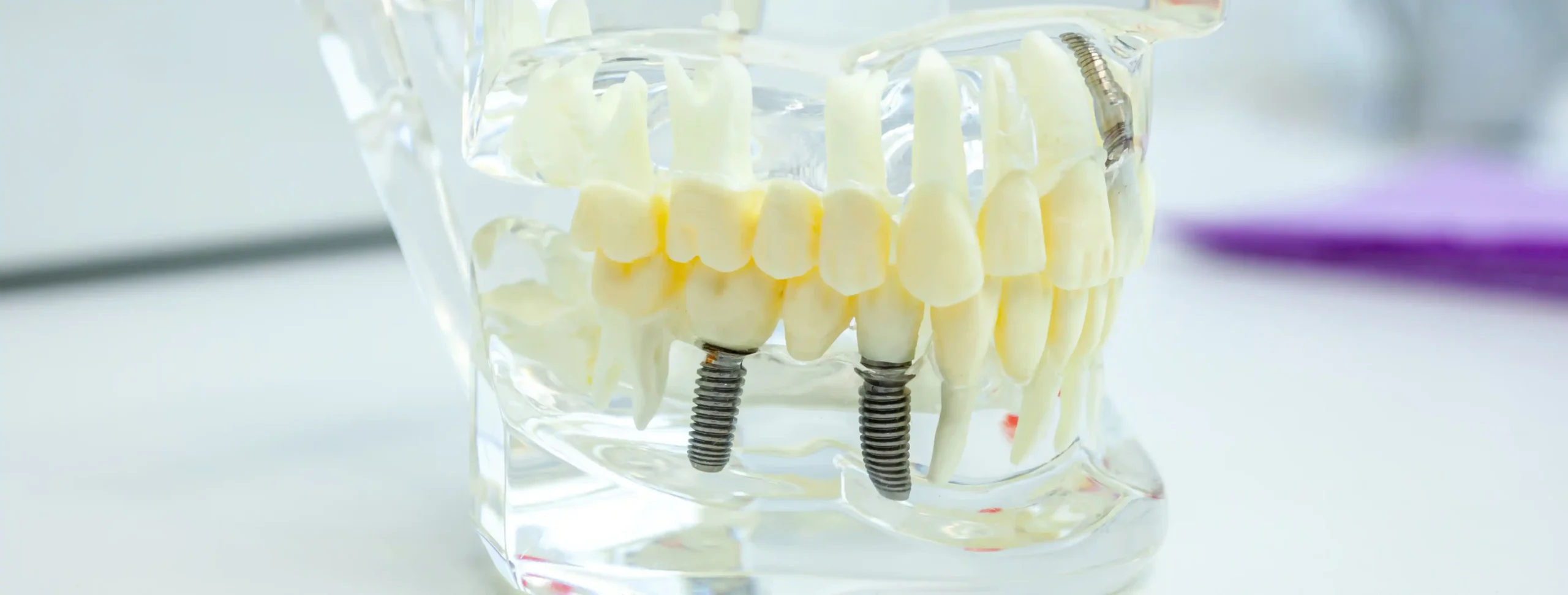
At Warner Dental , we provide Implant-Supported Dentures as a treatment option for patients who are missing most or all teeth and are seeking improved denture stability.
A denture supported by implants attaches to dental implants placed in the jawbone. Unlike traditional removable dentures that rest only on the gums, implant-supported dentures connect to two or more implants, which may improve stability while remaining removable for daily cleaning.
A personalised consultation is required to determine suitability. Outcomes vary between individuals, and implant treatment involves surgery with associated risks.
An implant-supported denture (also called an overdenture or implant retained dentures) is a removable denture that connects to dental implants placed in the jaw.
Instead of relying solely on suction or adhesives, the denture clips or snaps onto implants that act as anchors. This design may reduce movement during speaking and chewing compared with conventional removable dentures.
Implant-supported dentures may be considered for patients who:
Not all patients are suitable. Clinical examination, 3D imaging, and a full medical and dental assessment are required.
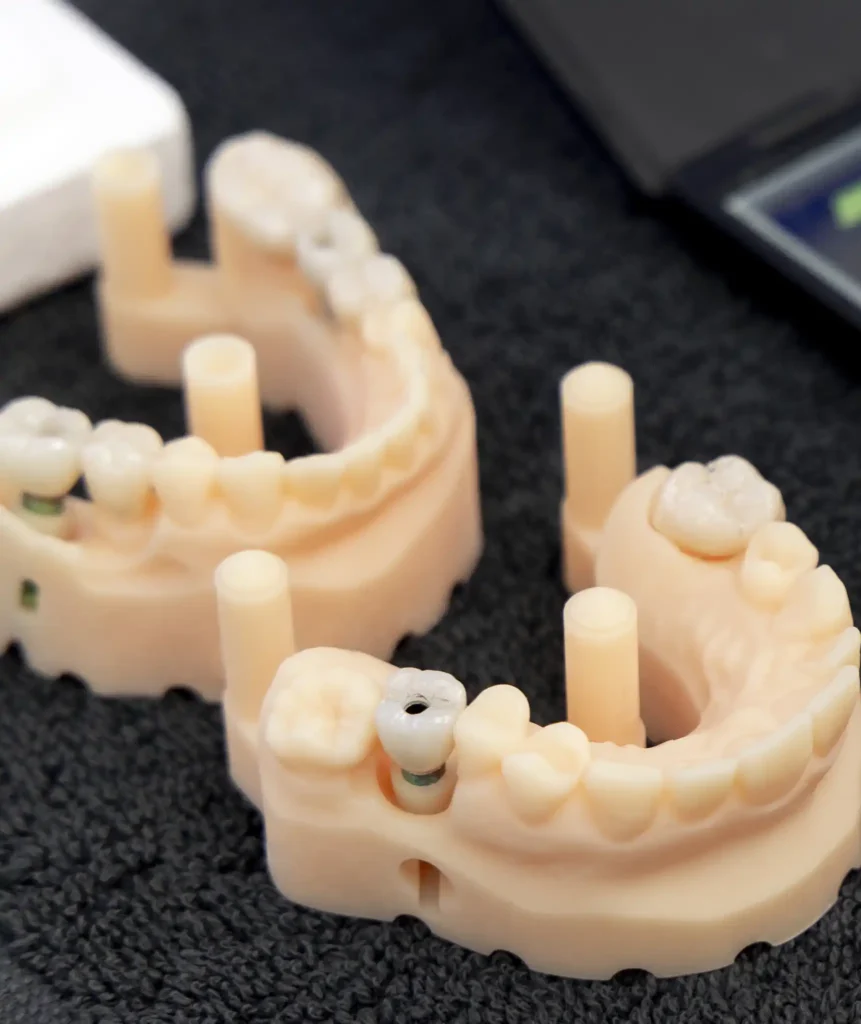
Patients often ask about dentures vs implants.
There are important differences:
Each option has benefits, limitations, costs, and risks. A consultation helps determine which approach aligns with your clinical needs and preferences.
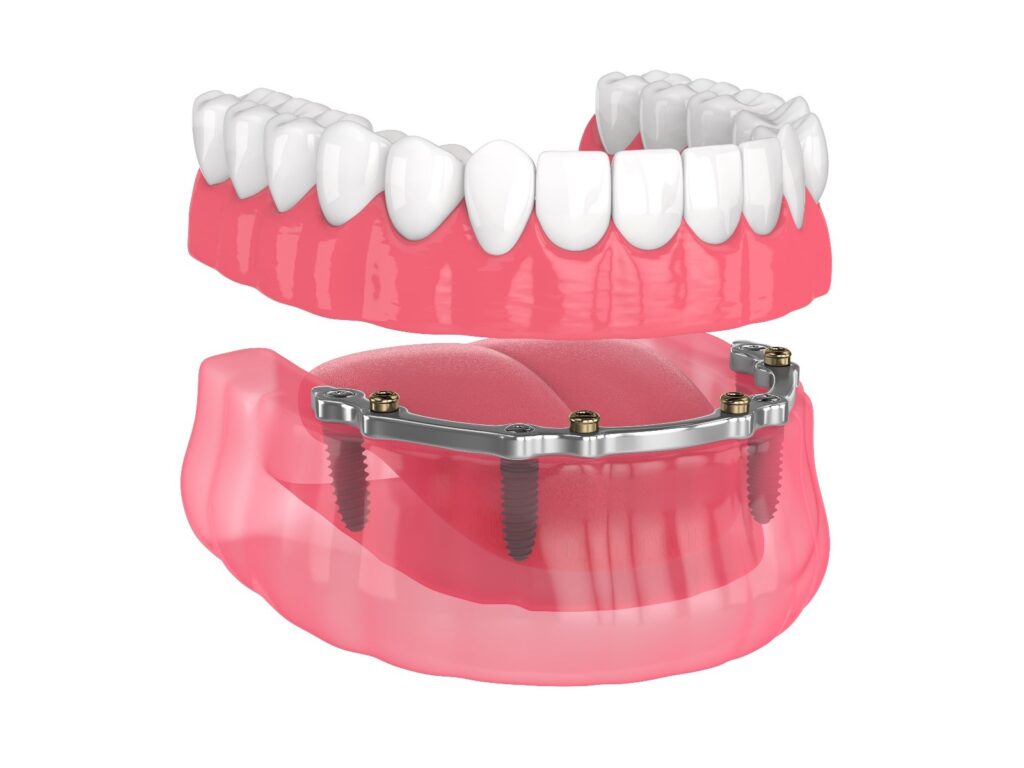
The difference between an overdenture and conventional dentures lies in how they are supported.
While many patients report improved stability with implant-retained dentures, comfort and function vary between individuals.
Surgical risks may include:
Risk varies depending on medical history, smoking status, and bone quality.
Ongoing maintenance and follow-up are required.
Implant-supported dentures are not suitable for everyone. Suitability depends on individual clinical factors.
You may be considered for a denture supported by implants if:
Bone grafting may be required in some cases. Smoking and certain medical conditions may affect healing outcomes.
A comprehensive consultation is essential before proceeding.
Long-term care includes:
With appropriate care:
Longevity depends on oral hygiene, general health, and regular follow-up care.
Costs vary depending on:
An itemised written treatment plan is provided following consultation.
If you are missing most or all teeth or experiencing instability with removable dentures, a consultation can help determine whether implant-supported dentures are a suitable option to improve denture support, comfort, and function.
Protect your smile with regular care at Warner Dental.
In Australia, implant‑supported dentures typically cost $4,000 to $30,000+, depending on the number of implants, clinic location, and prosthesis type. Single arch treatment often falls between $8,000 and $25,000.
Costs vary widely because of factors like implant brand, surgical fees, bone grafting, anaesthesia, and whether treatment is performed by a general dentist or specialist. A single implant can cost about $2,000–$4,000, and multiple implants supporting a denture naturally increase the total. Laboratory charges for the denture itself add a high cost. Many practices offer payment plans or financing to help spread expenses.
Ask your dentist for a written quote and a detailed cost breakdown. Confirm what’s included (e.g., scans, aftercare) and whether insurance or payment plans are available.
Many people find implant‑supported dentures worth the investment due to improved stability, speech, chewing comfort, and bone preservation compared with conventional dentures. Individual satisfaction depends on expectations and oral health.
Unlike removable dentures, implant‑supported dentures are anchored to dental implants, reducing movement and gagging and improving function. This can enhance confidence and quality of life. For suitable candidates with adequate bone and good general health, the functional and psychological benefits often outweigh the higher cost. However, not everyone is a candidate, and outcomes vary with surgical skill, healing, and maintenance.
Discuss your goals and medical history with your dentist to see if implants suit you and align with your priorities.
With excellent care, implant‑supported dentures and their implants can last 10–30+ years. The denture prosthesis may need replacement or relining more regularly than the implants themselves.
Titanium implants osseointegrate with bone and are highly durable, but longevity depends on oral hygiene, bite forces, smoking status, and overall health. The denture component experiences normal wear and may require lab adjustments or replacement over time. Regular dental visits and good home care promote longevity.
Attend twice‑yearly checkups, clean around implants daily, and avoid habits like smoking or biting hard objects to maximise lifespan.
Initial recovery from implant placement usually takes 3–7 days. Full healing and osseointegration typically take 3–6 months before final dentures are attached.
After surgery, swelling, tenderness and minor bleeding are common for a few days. Soft diet and rest help. Implants must integrate with bone, a biologic process that takes months. Some practices offer “immediate load” options where a temporary denture is placed on the same day, but final prostheses are fitted after healing. Healing can be longer if bone grafts are needed.
Follow your dentist’s post‑op instructions, take prescribed medications, and eat soft foods during early healing.
Yes — most people can eat a wide variety of foods comfortably with implant‑supported dentures once healed. Hard and sticky foods may still require caution initially.
Because implant‑supported dentures are stable and anchored, chewing efficiency is significantly better than with conventional dentures. You should be able to bite and chew hearty foods; however, adaptation takes time. Very hard foods (e.g., nuts, ice) and sticky foods (e.g., caramel) can stress prostheses or implant interfaces, so moderation is wise. Individual comfort varies with healing and prosthesis design.
Start with softer foods after healing, gradually reintroduce firmer foods, and ask your dentist about safe choices.
Overdentures improve stability, chewing ability, comfort, and confidence compared with conventional dentures, slow bone loss, and can often be removed for cleaning — combining function with ease of maintenance.
Overdentures that attach to implants avoid slipping and sores common with traditional dentures. They distribute chewing forces more evenly, preserving the jawbone and supporting the facial structure. Being removable makes daily hygiene straightforward. They can enhance speech and reduce denture adhesives. Benefits depend on proper fit, surgical planning, and maintenance.
Discuss implant number and attachment types (e.g., bar vs. locator) with your dentist to match function and hygiene needs.
Risks include surgical complications, infection, implant failure, prosthesis wear, sore spots, bone loss if implants fail, and additional cost. Good hygiene and professional care reduce many risks.
Any surgery carries bleeding, swelling, bruising, and infection risk. Implants can fail to integrate, requiring removal. Overdentures can still cause pressure points needing adjustment. Poor hygiene can lead to peri‑implantitis (infection around implants), bone loss, and eventual failure. Smoking, systemic health issues, or inadequate bone increase risk. Long‑term maintenance and professional monitoring are essential.
Follow oral hygiene instructions, attend regular dental checkups, and report any discomfort promptly.
Single dental implants replace individual missing teeth without affecting neighbouring teeth. A custom crown is attached to the implant to restore appearance and chewing function.
All-on-4 or All-on-X implant treatment replaces a full arch of missing teeth using a small number of strategically placed implants that support a fixed bridge.
Implant-supported dentures connect to dental implants for improved stability compared with conventional removable dentures, helping reduce movement while speaking or eating.
For patients with extensive tooth loss or complex dental issues, full mouth rehabilitation may combine implants with restorative and cosmetic treatments to restore both function and appearance.
Guided implant surgery uses three-dimensional digital planning and a fabricated surgical guide to position implants accurately according to the patient’s anatomy and prosthetic requirements.