
For routine visits, emergencies, and general enquiries
Get Direction
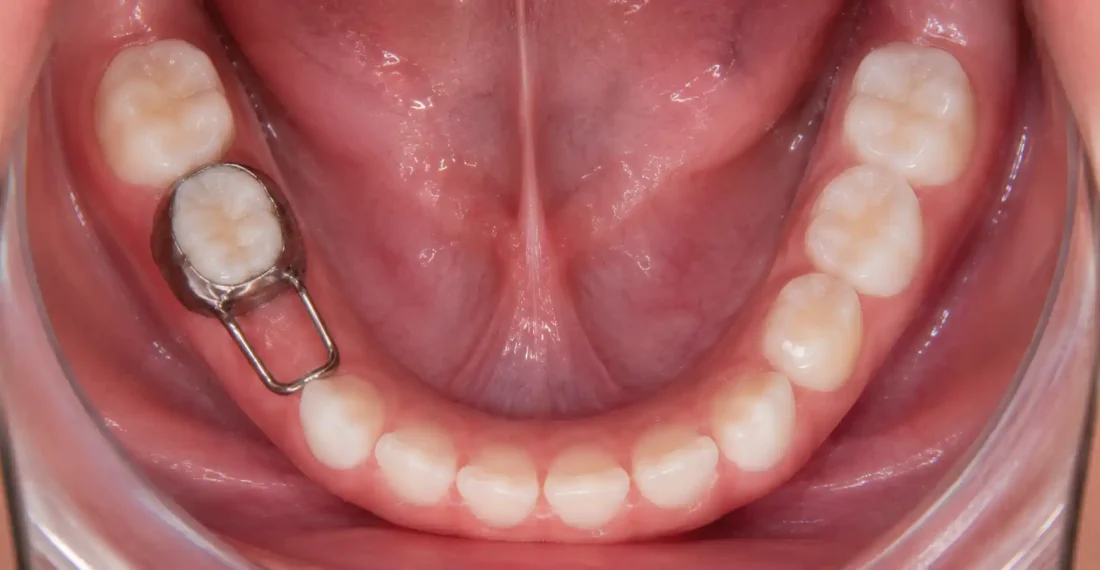
If your child has lost a baby tooth earlier than expected, you may have heard your dentist mention a space maintainer. For many parents this is unfamiliar territory, and it is natural to want to understand what one is, why it might be suggested, and what the options involve.
This guide is a single, comprehensive resource on the topic. It covers what space maintainers are, why early tooth loss happens, the main types used in children’s dentistry, how a dentist weighs up the options, what to expect at an appointment, home care, cost, and the questions parents ask most. It is written as general educational information only.
Every child’s mouth develops differently. Whether a space maintainer is appropriate, and which type may suit your child, is a decision made through individual professional assessment. Use this guide as a starting point, whether you are researching before a dental visit or making sense of something a dentist has already raised.
A space maintainer is a small dental appliance used in children’s dentistry. Its job is to hold open the gap left behind when a baby tooth is lost before it would naturally fall out.
According to healthdirect Australia, baby teeth help guide the permanent teeth into position as they develop beneath the gums. Losing one early can affect the space available later on.
When a baby tooth is lost too soon, the teeth around the gap can gradually shift into the empty space. This can happen after decay, an injury, or a necessary extraction. A space maintainer holds that space open so the permanent tooth underneath has room to erupt where it is meant to.
A few basic points help set the scene:
It is helpful to think of the appliance as a placeholder. It does not move teeth the way braces do, and it is not a cosmetic device. Its single job is to preserve the space nature intended for the adult tooth.
This overview draws on general clinical guidance from healthdirect Australia and the Australian Dental Association. It is background information rather than advice for any particular child.
The position of baby teeth can influence how the permanent teeth eventually settle into place. This is one reason early tooth loss is something dentists take into account. The Australian Dental Association notes that appropriate spacing during childhood is among the factors considered as part of general paediatric oral health care.
Early tooth loss is not unusual in Australia, and decay is a common underlying cause. Drawing on the National Child Oral Health Study 2012 to 2014, the Australian Institute of Health and Welfare reports that around 1 in 4 children aged 5 to 10, about 27 percent, had at least one baby tooth with untreated decay. This helps explain why questions about spacing come up so often during children’s dental visits.
To picture why the gap matters, it helps to understand what happens beneath the gum. A permanent tooth spends years forming below the surface before it erupts. Baby teeth help maintain the space and alignment needed for permanent teeth as they develop and erupt.
When a baby tooth is lost early, two things can happen over time:
Neither of these happens in every case, and outcomes vary from child to child. A dentist may raise a pediatric space maintainer as one option worth considering here, though no appliance can guarantee a particular result. It is also worth knowing that not every lost baby tooth calls for a space maintainer, since much depends on which tooth was lost and how close the adult tooth is to arriving.
Understanding why a baby tooth was lost early can help you follow the conversation with your dentist about what comes next. There are several common reasons, and the cause can sometimes influence the approach that is discussed.
The more frequent reasons include:
Whatever the cause, the practical question for parents is usually the same: what happens to the gap now, and does it need managing? That is where a space maintainer may enter the discussion, depending on the tooth involved and the child’s stage of development. General information about children’s dental health is available through healthdirect Australia if you would like broader background reading.
There are several types of space maintainers used in paediatric dentistry, and the sections below explain the ones parents are most likely to hear about. Some designs suit a single gap, while others are used when more than one tooth is involved.
The band and loop space maintainer is one of the most commonly used designs. It suits situations where a single baby tooth, usually a molar, has been lost.
It has two simple parts:
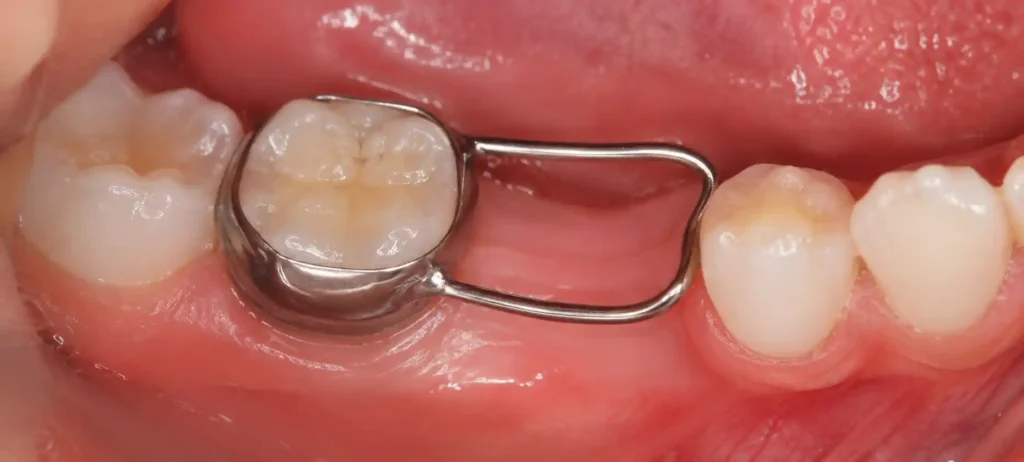
Together, these limit the movement of neighbouring teeth into the gap, while still leaving room for the permanent tooth to erupt underneath in its own time.
A band and loop space maintainer is a type of fixed space maintainer. It is cemented onto the tooth and is not intended to be removed at home by the child or parent.
It tends to be favoured for single gaps because it is relatively simple, sits mostly out of sight toward the back of the mouth, and asks little of the child day to day. Because it is custom fitted, the dentist will check the appliance fits appropriately and arrange follow-up as needed to confirm it remains secure.
A distal shoe space maintainer is used in a more specific situation. It typically applies when a baby second molar is lost before the permanent first molar behind it has erupted.
This scenario is less common. It calls for a different design because there is no tooth positioned behind the gap to anchor a standard band and loop appliance.
Instead, a distal shoe appliance includes a small metal extension that sits just below the gum line. The extension is positioned to help maintain the intended space as the permanent molar develops and erupts. Because part of the appliance sits beneath the gum tissue, a dentist will monitor it closely and explain what to watch for at home.
A distal shoe is generally a temporary solution. Once the permanent molar has erupted enough, it is usually replaced with another type of space maintainer that can be anchored in the more conventional way.
For single gaps, band and loop and distal shoe designs are the ones most parents encounter. When more than one tooth is involved, or when teeth on both sides of the mouth are affected, a dentist may describe other fixed designs.
Two you may hear mentioned are:
These are described here only so the names are familiar if a dentist mentions them. Which design, if any, suits a particular child is something the treating dentist determines on examination.
Space maintainers broadly fall into two categories, each with its own general considerations:
The table below offers a simple comparison. It is a guide only, not a recommendation.
Appliance type | Fixed or removable | Typical general use case | General care note |
Band and loop | Fixed | A single lost baby molar with a tooth on each side of the gap | Cleaned in the mouth during normal brushing, reviewed by the dentist |
Distal shoe | Fixed | A baby second molar lost before the permanent first molar has erupted | Monitored closely, often a temporary appliance |
Removable maintainer | Removable | Some cases involving one or more gaps where an acrylic appliance suits | Taken out for cleaning, relies on consistent wear as instructed |
A removable appliance only works while it is in the mouth, so consistent wear matters. A fixed appliance removes that variable but cannot be cleaned separately at home. Which approach suits a child is decided case by case, alongside the dentist’s professional judgement.
Parents often ask how a dentist actually chooses between the different types of space maintainers. The final decision always rests on an individual examination, but it helps to understand the general factors that come into the discussion. The table below sets these out in plain terms.
Factor a dentist may consider | Why it can influence the choice |
Which tooth was lost | Front teeth, single molars, and second molars each tend to point toward different approaches |
How soon the adult tooth is expected | A tooth arriving soon may need less intervention than one that is years away |
Whether teeth sit on both sides of the gap | Some designs need a neighbouring tooth on each side to anchor to |
The child’s age and stage of development | This affects both the appliance chosen and how long it may be needed |
How the child manages appliances | Consistent wear matters more for removable designs than fixed ones |
General oral health and hygiene habits | Existing decay risk can shape both the plan and the aftercare advice |
None of these factors works in isolation. A dentist weighs them together rather than following a fixed formula. This is also why two children who have each lost a similar tooth might be offered different suggestions.
The purpose of sharing these factors is not to help you self-diagnose. It is to help you follow the conversation and ask useful questions when you see a dentist.
Fitting a space maintainer is commonly carried out in a dental setting, and it may involve several steps depending on the appliance chosen. It is a non-surgical process, and the exact sequence varies from child to child.
The appointment usually follows a few stages:
For a removable design, a similar process applies, with the finished appliance fitted and adjusted for comfort. The exact fitting process depends on the type of space maintainer and your child’s individual circumstances.
Many children settle into the appliance without much difficulty, though some need a short period to get used to the feeling of something new in the mouth. Because experiences differ, parents are welcome to ask the treating dentist what to expect for their child’s specific situation.
Follow-up visits are generally scheduled so the dentist can check the appliance remains secure, monitor the eruption of the permanent tooth, and make adjustments if needed. Keeping these appointments is part of how the appliance is looked after over time.
The first days after fitting are usually when a child notices the appliance most, so it helps to know what tends to be typical. Some children need a short period of adjustment to having a new appliance in their mouth, and may take a little time to adjust to eating or speaking around it. This generally settles as the child gets used to it.
A few simple things often make the settling in period smoother:
If discomfort continues beyond the first several days, or if the appliance feels sharp, loose, or different in any way, it is reasonable to contact the practice so it can be checked. Every child responds a little differently, and the treating dentist is the best person to advise on your child’s specific experience.
Most space maintainers are designed with back teeth, such as molars, in mind. These are the teeth most commonly lost early due to decay.
A space maintainer for front teeth is less common. This is partly because front teeth are less likely to be lost prematurely, and partly because the appearance and function of the front of the mouth call for different considerations.
When a front tooth is lost early, a dentist may look at a range of options depending on the child’s age and individual needs. The front teeth are visible and play a role in speech and appearance, which is why the approach here can differ from the back of the mouth.
If your child has lost a front tooth earlier than expected, discussing the options directly with a dentist is the most reliable way to understand what may suit their situation. General information can help you prepare questions, but it cannot replace an examination.
The length of time a space maintainer remains in place varies from child to child. It depends largely on when the permanent tooth underneath is expected to erupt. In general terms, an appliance may stay in place for anywhere from several months to a couple of years.
Because every child’s dental development timeline is different, a dentist will monitor progress at regular check ups. The appliance is removed once it has served its purpose, usually once the permanent tooth has erupted sufficiently.
Parents should not expect a fixed timeframe to be set in advance. This is reviewed and confirmed over the course of ongoing appointments rather than at the first visit.
Looking after a space maintainer at home is generally similar to everyday oral hygiene, with a few extra points of care.
General guidance often includes:
It also helps to know the general signs that an appliance may need a professional check:
Noticing these early and arranging a review tends to make any adjustment simpler.
These points are general in nature. Your treating dentist may provide more specific instructions based on the type of space maintainer your child has, and their advice should always take priority. Building simple habits around brushing and food choices early on tends to make the appliance easier to live with day to day.

The cost of a space maintainer can vary. It depends on factors such as the type of appliance used, the number of teeth involved, and the individual clinical needs of the child. Because of this variation, it is not possible to quote a standard price that would apply to every family.
Different appliance types involve different materials and laboratory processes, which is one reason space maintainer cost differs from case to case. A simple single band and loop appliance and a more involved arrangement are not directly comparable in cost. It is also worth remembering that the fitting appointment, any X-rays, and follow-up reviews can form part of the overall picture.
For families thinking about budgeting, a couple of points are worth knowing:
The most reliable way to understand likely costs for your child is to have their situation assessed directly, so a personalised quote can be provided rather than a general estimate.
If your child has lost a baby tooth earlier than expected, whether through an accident, decay, or another cause, it is generally worth arranging a check up so the situation can be properly assessed. A dentist can examine the tooth involved, take any necessary X-rays, and discuss whether a space maintainer or another approach may be worth considering.
Good general oral hygiene and regular check ups also play a role in reducing the likelihood of early tooth loss from decay. Our page on decay prevention for children covers general guidance on this topic in more detail.
The right course of action for your child will always depend on an individual professional assessment. If you are unsure whether your child needs to be seen, reaching out to a dental practice for advice is a reasonable first step.
This guide was prepared by the Warner Dental team and reviewed for general accuracy by Dr Pawan Bista, a registered dental practitioner (Dental Board of Australia registration number DEN0002295134). It reflects publicly available clinical guidance and is intended as general educational information rather than individual advice.
You can learn more about the clinicians behind this content on the dental team page. Last updated: August 2026.
Space maintainers are an established treatment option in paediatric dentistry. They help manage the space left behind when a baby tooth is lost too early. As this guide has covered, there are different types available, including band and loop and distal shoe designs, along with fixed and removable options. The most suitable choice depends on the individual child’s circumstances and professional assessment.
If you have a question this guide did not answer, or feel there is something we could add to make it more helpful, we would be glad to hear from you. For more detail you can visit the space maintainer service page. If you would like your child’s situation assessed, you can contact the practice to arrange a consultation.
Disclaimer: This article is general educational information for parents, not a diagnosis or treatment plan for any individual child. It draws on publicly available guidance from healthdirect Australia, the Australian Dental Association, and the Australian Institute of Health and Welfare, and does not guarantee any particular outcome. The right treatment for your child can only be determined by a registered dental practitioner who has examined them. If you have concerns about your child’s teeth, please arrange to see a dentist.
FAQs
Whether a child needs a space maintainer depends on individual factors such as which tooth was lost, their age, and how soon the permanent tooth is expected to come through. It is not something that can be worked out from general information alone. A dental assessment, including an examination and sometimes an X-ray, is the most reliable way to find out whether one may suit your child.
Comfort varies from child to child. Some children need a short period of adjustment to having a new appliance in their mouth, much like getting used to any unfamiliar dental item, and some may notice tenderness or discomfort while they settle in. If your child seems bothered beyond the first few days, or is uncomfortable at any point, it is worth mentioning to the treating dentist so the fit can be checked.
The length of time varies depending on when the permanent tooth underneath is expected to erupt, which is monitored through regular check ups. In general terms, it can range from several months to a couple of years. Rather than a fixed date set in advance, the timing is confirmed by the dentist as your child’s development is reviewed over successive appointments.
It is possible for a space maintainer to become loose over time, particularly if very sticky or hard foods are eaten or if the appliance is knocked. If this happens, it is best to contact your dental practice promptly so the appliance can be checked and repaired or refitted if needed. Keeping the loose appliance safe until the appointment can also help.
They serve different purposes. A space maintainer is generally used to hold open a gap left by an early lost baby tooth so a permanent tooth has room to erupt. A retainer is more commonly used later on to help hold teeth in position after orthodontic treatment. Some removable space maintainers can resemble a retainer in appearance, but their intended function is different.
If a lost baby tooth is not managed with a space maintainer where one may have been suitable, there is a possibility that neighbouring teeth could shift into the available space over time. This does not happen in every case, and outcomes vary between children. An individual dental assessment is the best way to understand what may be relevant for your child, rather than assuming a particular result either way.
Costs vary depending on the type of appliance, the number of teeth involved, and individual clinical needs, so there is no single standard price. Some families may be eligible for support through the Child Dental Benefits Schedule, and private health insurance may cover part of the cost depending on the policy. The most accurate way to understand likely costs is to have your child assessed so a personalised quote can be provided.
In some cases, a space maintainer can be removed earlier than originally planned, for example if the permanent tooth erupts ahead of schedule or if there is a clinical reason to do so. This decision is made by the treating dentist based on an assessment of the child’s individual progress at their regular check ups, rather than on a set schedule.
Related Blogs