
For routine visits, emergencies, and general enquiries
Get Direction
Dental Implants
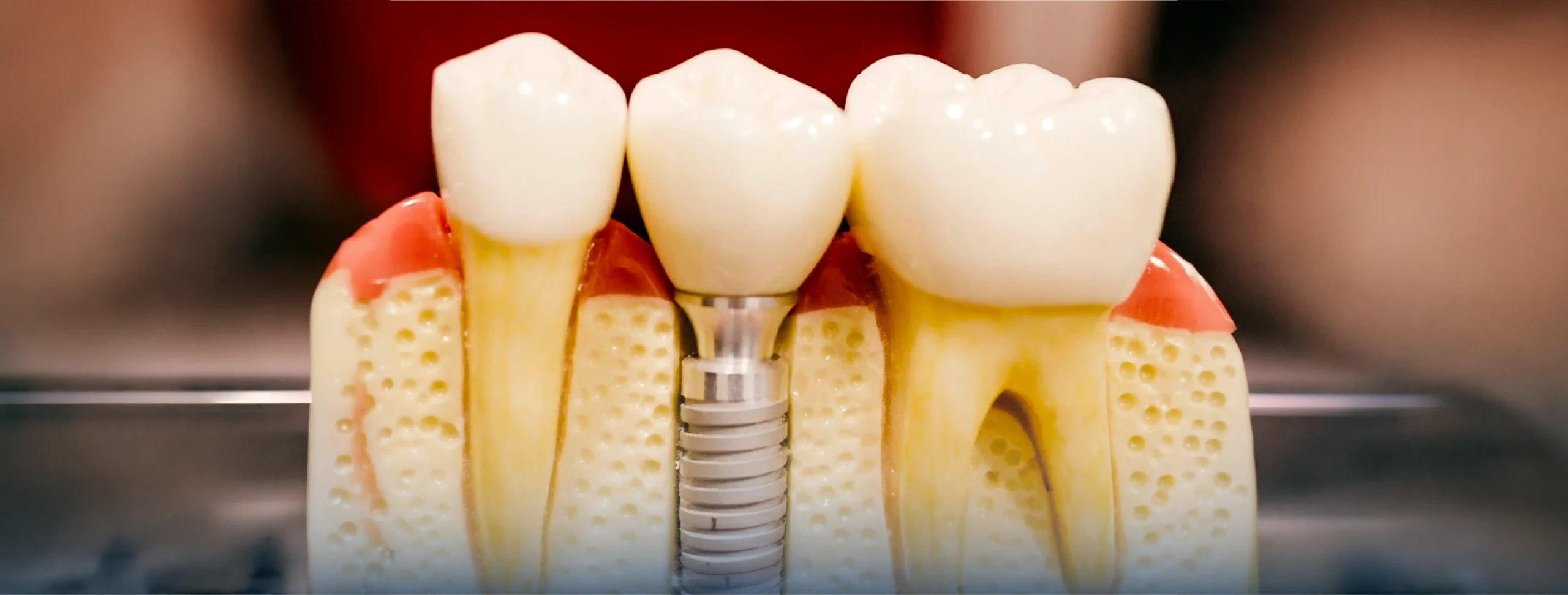
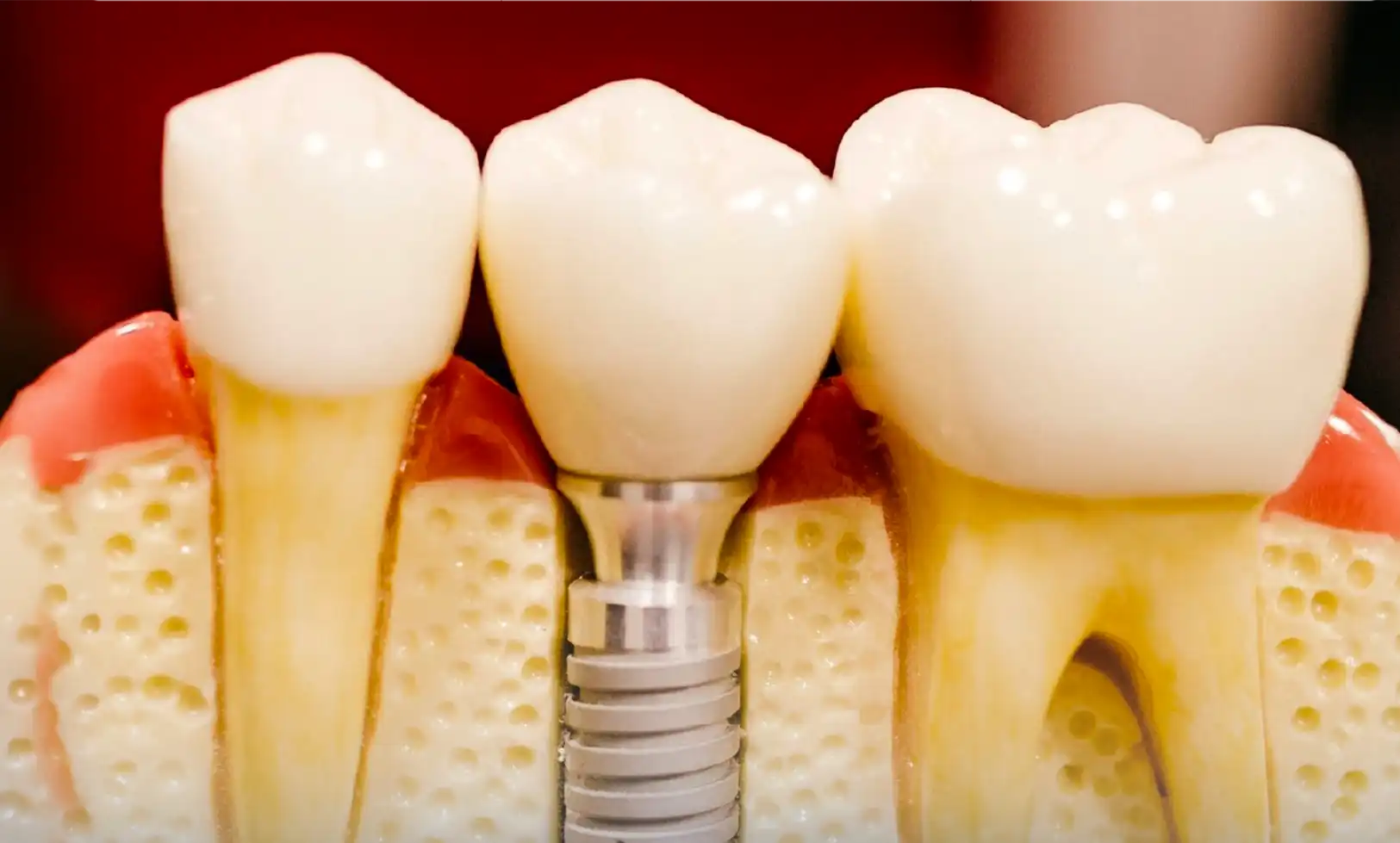
A dental implant replaces the root of a missing tooth with a small titanium post, which then holds a crown, bridge, or full set of teeth. Whether you are missing one tooth, a few, or a whole arch, there is usually an implant option to suit.
At Warner Dental we assess and provide dental implants for patients across Warner and North Brisbane. Implant treatment is a surgical procedure, it carries risks, and it is not suitable for everyone. Suitability is confirmed through an examination and imaging, and outcomes vary between patients. This page is general information, not a diagnosis.
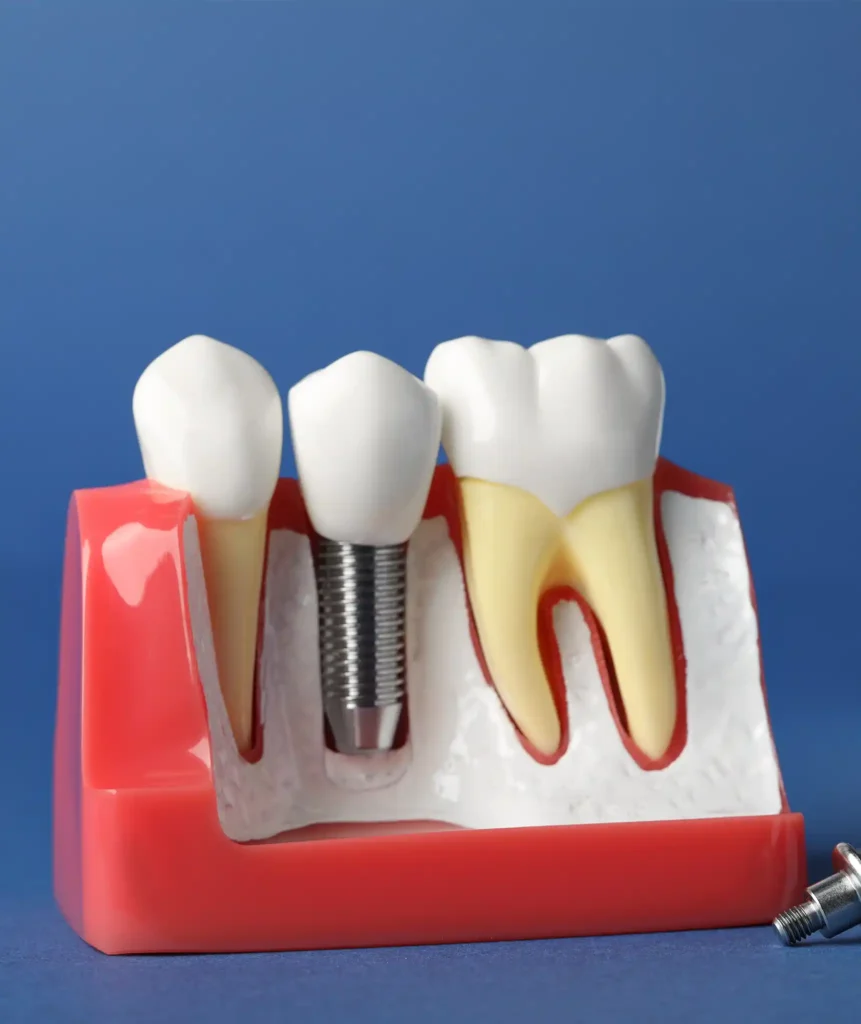
An implant is a titanium post placed into the jawbone, where it acts as an artificial tooth root. Over the following weeks to months, the bone grows around it and holds it firmly in place, a process called osseointegration.
Once it has integrated, a custom-made crown, bridge, or denture is attached on top. The result is a replacement tooth that is fixed in place and does not rely on the teeth beside it for support.
Implants are used in several ways, and each has its own dedicated page if you want more detail.
Your dentist helps you work out which option fits your situation at your consultation.
Implants suit many people, but not everyone. Suitability is confirmed with a clinical examination and 3D imaging. The main things we assess are:
If implants are not the best route for you, we will explain the alternatives, such as dental bridges or removable dentures, so you can make an informed choice.
Implant treatment happens over several months, mostly to allow proper healing. Here is what to expect.
A clinical examination and 3D imaging check your bone and oral health. Your dentist then builds a plan that covers your options, the timeframe, the risks, and the cost. Where helpful, guided implant surgery is used to plan placement precisely.
The implant is placed into the jawbone under local anaesthetic. How long this takes depends on how many implants are placed and whether any extra procedures are needed.
The implant is left to integrate with the bone over several weeks to months. Healing time varies from person to person. A temporary tooth can often be worn during this stage.
Once the implant has integrated, your custom crown, bridge, or denture is attached and adjusted, restoring how your teeth look and work.
Like any surgery, implant treatment carries risks. Your dentist explains these fully before you consent. They may include:
With good care, many implants last for many years, and often much longer. The implant post itself is designed to be a long-term solution, while the crown or denture on top may need maintenance or replacement over time. Longevity depends on your oral hygiene, general health, smoking, and keeping up regular reviews.
There is no single price for implant treatment. The cost depends on how many implants are needed, whether bone grafting is involved, and the type of final restoration. Your health fund cover also affects what you pay out of pocket.
After your consultation you receive a written treatment plan setting out all the fees, so there are no surprises. If cost is a concern, ask us about the payment options we offer.
If you are missing one or more teeth, a consultation can help you find out whether implants are a suitable long-term option for you. For background reading first, see our complete guide to implants. To get started, book a consultation or call (07) 3882 3200.
This information is general in nature and does not replace personalised dental or medical advice.
Protect your smile with regular care at Warner Dental.
FAQs
Yes. A single implant with a crown is a common way to replace one missing tooth. A benefit over a traditional bridge is that the healthy teeth on either side are left untouched, since the implant stands on its own in the jaw. Your dentist will confirm whether you have enough bone to support it.
The implant is placed under local anaesthetic, so you should not feel pain during the procedure itself. Afterwards, it is normal to have some soreness and swelling for a few days, which is usually managed with ordinary pain relief. Many people say it felt more straightforward than they expected.
It usually spans several months, because the implant needs time to integrate with the bone before the final tooth is attached. Simpler cases move faster, while those needing bone grafting take longer. A temporary tooth can often be worn in the meantime, and your dentist will map out your timeline.
There is no strict upper age limit. What matters more than age is your general health, your gum health, and whether you have enough jawbone to support an implant. Many older adults have implants successfully. A full assessment is the way to know if it suits you.
Both smoking and poorly controlled diabetes can slow healing and raise the risk of implant problems, but they do not automatically rule you out. Well-managed diabetes and cutting down or quitting smoking improve your chances. Your dentist will talk through your individual risk before you decide.
Each has its place. An implant stands alone and does not involve the neighbouring teeth, while a dental bridge is fixed to the teeth on either side and is often quicker and less costly upfront. The best choice depends on your teeth, your bone, and your budget, which your dentist will go through with you.
Many private health funds with extras cover contribute toward part of implant treatment, but the amount varies with your fund, your level of cover, and annual limits. We provide a written treatment plan you can check against your policy or take to your fund for a quote before you commit.
Implant failure is uncommon, but it can happen if the implant does not integrate or an infection develops. Implants are not rejected by the body the way a transplant can be, since titanium is well tolerated. If one does fail, it is usually removed, the area is allowed to heal, and options including a replacement implant are discussed.
Single dental implants replace individual missing teeth without affecting neighbouring teeth. A custom crown is attached to the implant to restore appearance and chewing function.
All-on-4 or All-on-X implant treatment replaces a full arch of missing teeth using a small number of strategically placed implants that support a fixed bridge.
Implant-supported dentures connect to dental implants for improved stability compared with conventional removable dentures, helping reduce movement while speaking or eating.
For patients with extensive tooth loss or complex dental issues, full mouth rehabilitation may combine implants with restorative and cosmetic treatments to restore both function and appearance.
Guided implant surgery uses three-dimensional digital planning and a fabricated surgical guide to position implants accurately according to the patient’s anatomy and prosthetic requirements.