
For routine visits, emergencies, and general enquiries
Get Direction
Stainless Steel Crown Treatment

A stainless steel crown is a durable protective cap placed over a damaged or weakened tooth. In children’s dentistry, it is commonly used to restore a baby tooth that cannot be repaired with a simple filling.
The crown covers the whole tooth to protect it from further decay, restore normal chewing, and hold space for the permanent tooth underneath. At Warner Dental in Warner and North Brisbane, we use stainless steel crowns because they are strong, reliable, and well suited to managing extensive decay in developing teeth. Book a consultation or call (07) 3882 3200.
A child may need a stainless steel crown when a tooth has significant decay or structural damage. Common reasons include:
A pulpotomy is a treatment used when decay reaches the inner pulp of the tooth but infection has not spread to the root. After the affected pulp is removed, the tooth is restored with a stainless steel crown for longer-lasting protection. This helps preserve the baby tooth so it can keep functioning until it falls out naturally.
Stainless steel crowns are a standard option in children’s restorative care because they provide reliable coverage for teeth that can be difficult to restore with a filling alone.
Possible benefits include:
Unlike a crown made individually for an adult tooth, children’s stainless steel crowns are pre-shaped and adjusted to fit efficiently. This helps the dentist complete treatment in a single visit where possible, which can make the experience easier for a young patient. Where a tooth has only minor decay, a tooth-coloured filling may be more appropriate, and your dentist will advise which option suits your child.
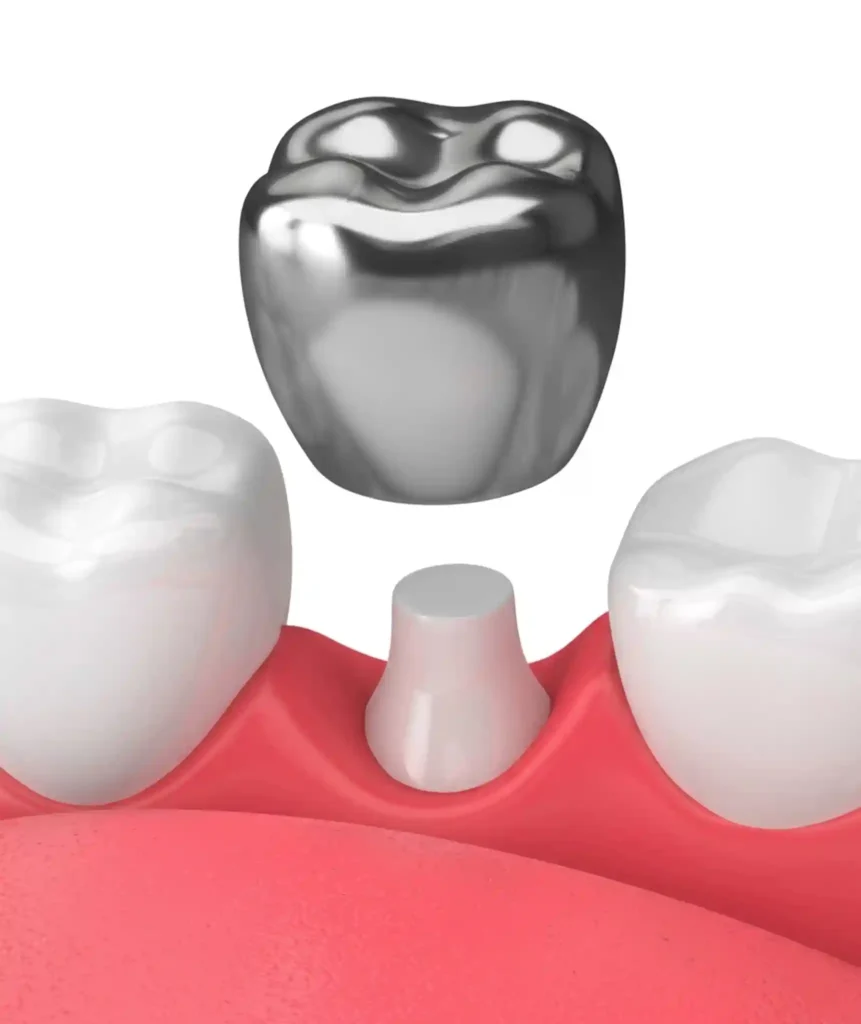
Placing a stainless steel crown is usually straightforward. The typical steps are:
Once placed, the crown works like a natural tooth surface, allowing normal chewing and protecting the remaining tooth. Many children adapt quickly and can return to normal eating soon after treatment.
Stainless steel crowns have been used in paediatric dentistry for many years and are a well-established, widely accepted treatment for decayed or damaged baby teeth. As with any dental treatment, there are some considerations, such as temporary sensitivity after placement or, in rare cases, a crown becoming loose. Outcomes vary between children, and your dentist will explain the benefits, risks, and any alternatives so you can make an informed decision for your child.
Parents often ask about the cost when a crown is recommended. There is no single price, because it depends on:
We provide a clear, itemised estimate after examining your child, so you understand the cost before proceeding. Eligible children may also be able to access bulk billing for eligible children through the Child Dental Benefits Schedule, which we can check for you.
A stainless steel crown plays an important role in protecting a damaged baby tooth and supporting healthy dental development. By restoring strength and function, it helps a child maintain proper chewing, speech, and spacing for the permanent teeth. Combined with a regular routine check-up and clean and good preventive care at home, this treatment supports comfortable, long-term oral health.
If your child has a damaged or decayed tooth, our team can assess it and discuss whether a stainless steel crown is appropriate. Book a consultation or call (07) 3882 3200.
Protect your smile with regular care at Warner Dental.
FAQs
When a baby tooth has extensive decay or covers more than one surface, a filling may not hold or protect the tooth reliably. A stainless steel crown covers the whole tooth, which helps reduce the risk of further decay and often lasts until the tooth falls out naturally. For smaller cavities, a filling may still be the better choice, and your dentist will advise which suits your child.
A pulpotomy is used when decay has reached the inner pulp of the tooth but has not spread to the root. The affected pulp is removed to relieve the problem, and the tooth is then restored with a stainless steel crown for lasting protection. Doing both together helps save the baby tooth so it can keep its place until the adult tooth comes through.
Yes, they are a well-established treatment that has been used in children’s dentistry for many years. As with any procedure there can be minor considerations, such as short-term sensitivity, and individual outcomes vary. Your dentist will talk through the benefits and any risks before treatment so you can decide what is best for your child.
A stainless steel crown is designed to protect the tooth until it is naturally lost as part of your child’s normal dental development. In most cases it lasts for the remaining life of the baby tooth. Regular check-ups allow us to monitor the crown and the surrounding teeth over time.
It is uncommon, but a crown can occasionally become loose. If this happens, it is best to contact us so the tooth can be checked. In many cases the crown can be re-cemented or replaced. Keeping regular check-up appointments helps us spot any issue early and keep your child comfortable.
Most children can return to normal eating soon after treatment, once any numbness from the local anaesthetic has worn off. The crown restores the chewing surface of the tooth, so your child can use it much like a natural tooth. Your dentist may suggest being gentle with very hard or sticky foods at first.
Services
Routine examinations and professional cleaning for children to monitor oral development and maintain healthy teeth and gums.
Preventive treatments such as fluoride applications and oral hygiene education to help reduce the risk of tooth decay.
Custom appliances used to hold space for permanent teeth when baby teeth are lost prematurely.
Durable crowns used to restore and protect severely decayed or damaged baby teeth.
Eligible children may access dental care through the Child Dental Benefits Schedule (CDBS), which may cover certain dental services depending on eligibility.