
For routine visits, emergencies, and general enquiries
Get Direction
Gum Health and Bleeding Gums

Bleeding gums are commonly an early sign of gum inflammation and should not be ignored. Prompt bleeding gums treatment helps control infection, protect supporting bone, and maintain long-term gum health.
If your gums bleed when flossing or brushing, it is usually due to plaque accumulation along the gumline. While mild inflammation may improve with improved oral hygiene, persistent bleeding requires professional assessment.
Healthy gums generally do not bleed with gentle cleaning. Ongoing bleeding is typically a sign of inflamed gums caused by bacterial build-up.
Bleeding gums are most often caused by plaque build-up along the gumline, which triggers inflammation in the surrounding tissues.
Common Causes Include:
When plaque is not effectively removed, bacteria irritate the gum tissue. The small blood vessels within the gums become more fragile, leading to swelling, redness, and bleeding during brushing or flossing.
At this stage (gingivitis), the condition is typically reversible with timely care. If left untreated, inflammation may progress deeper, affecting the bone supporting the teeth (periodontitis).
Early bleeding gums treatment aims to stop infection before structural damage occurs.
If your gums bleed when flossing, this is usually due to plaque trapped between teeth that brushing alone cannot remove.
Here is what typically happens:
Many people stop flossing when bleeding occurs. However, avoiding flossing can worsen inflammation.
With consistent, gentle flossing and professional cleaning where needed, bleeding often reduces within one to two weeks.
Bleeding is a warning sign, not a reason to stop cleaning.
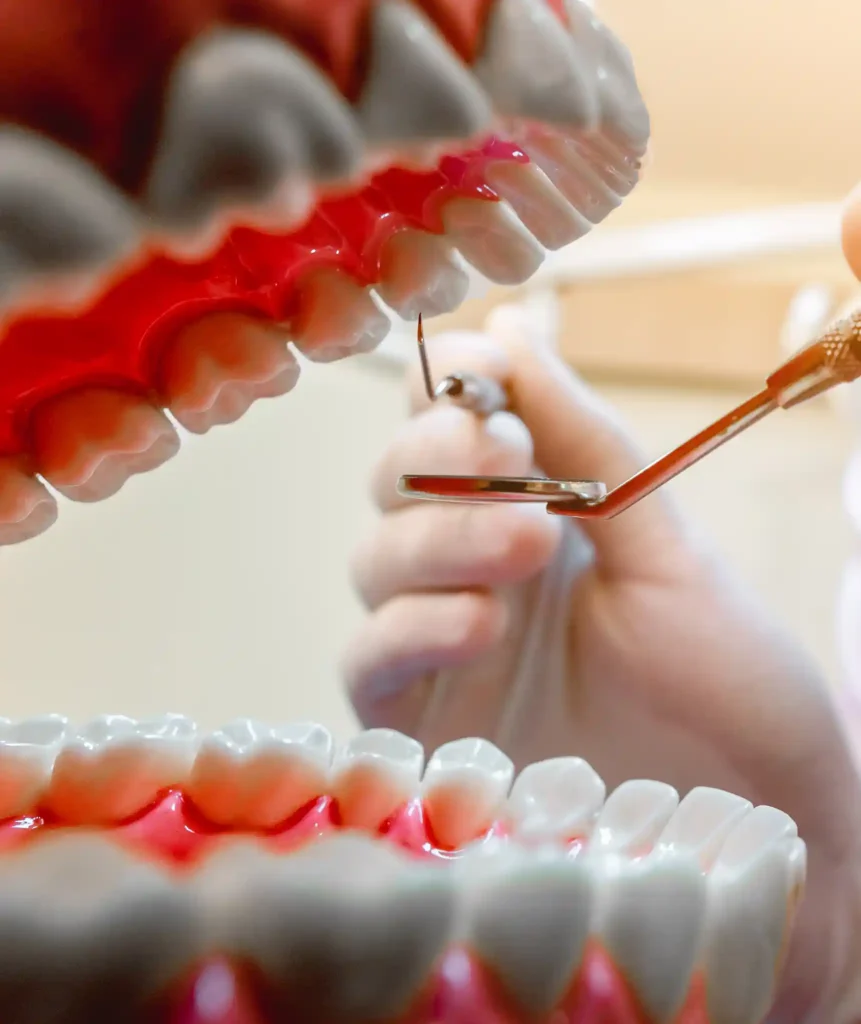
Effective bleeding gums treatment focuses on removing infection sources and restoring gum health safely.
Treatment may include:
This helps determine whether inflammation is limited to the gums or involves deeper supporting structures.
Scaling removes plaque and hardened tartar above and below the gumline.
If deeper infection is present, more detailed cleaning (such as scaling and root planing) may be recommended.
In many early cases, professional cleaning combined with improved home care leads to significant improvement in inflamed gums.
If you are wondering how to remove plaque from teeth effectively, daily mechanical cleaning is essential.
Recommended steps include:
Plaque can harden into tartar within days. Once hardened, it cannot be removed by brushing alone and requires professional cleaning.
To temporarily ease sore gums:
While these measures may reduce discomfort, they do not eliminate underlying infection if present. Persistent soreness should be professionally assessed.
If you are experiencing persistent bleeding, swollen, or inflamed gums, a comprehensive dental assessment can help identify the cause and determine the most appropriate bleeding gums treatment for your needs.
Protect your smile with regular care at Warner Dental.
Bleeding gums treatment is often necessary when bleeding persists beyond a few days, as ongoing bleeding commonly indicates gum inflammation or early gum disease.
While minor irritation may occasionally cause temporary bleeding, persistent bleeding usually signals plaque-related inflammation. Without treatment, gingivitis can progress to periodontitis, affecting the bone supporting your teeth. Early professional cleaning removes bacteria and reduces inflammation before permanent damage occurs. Delaying assessment increases the risk of deeper infection and more complex treatment.
If your gums bleed for more than one week, schedule a dental assessment.
Yes, inflamed gums caused by gingivitis can often return to normal with professional cleaning and consistent daily oral hygiene.
Gingivitis affects only the soft gum tissue and does not involve permanent bone damage. When plaque and tartar are removed and proper brushing and flossing are maintained, swelling and bleeding typically reduce within one to two weeks. However, if inflammation progresses to periodontitis, structural damage may occur and require ongoing management rather than complete reversal.
Seek treatment early to prevent permanent gum damage.
Gums often bleed when flossing because plaque builds up between teeth, causing inflammation that brushing alone may not remove.
Toothbrush bristles cannot effectively clean tight contact areas between teeth. Plaque accumulation in these spaces triggers inflammation, making gum tissue swollen and fragile. When floss disrupts this inflamed tissue, bleeding may occur. Consistent daily flossing combined with professional cleaning typically reduces bleeding within one to two weeks as inflammation resolves.
Continue gentle daily flossing unless advised otherwise by your dentist.
You can ease sore gums temporarily by rinsing with warm salt water, brushing gently with a soft toothbrush, and avoiding irritating foods.
Saltwater rinses may reduce surface bacteria and soothe inflamed tissues. Using a soft-bristled toothbrush helps prevent further irritation. However, these measures do not remove hardened tartar or treat underlying infection. Persistent soreness usually indicates ongoing inflammation requiring professional cleaning and clinical evaluation to prevent progression.
If soreness persists beyond a few days, book a dental appointment.
Assessment and management of inflamed or bleeding gums to prevent progression to advanced gum disease.
Removal of plaque and tartar from below the gumline to treat periodontitis and reduce infection.
Careful removal of teeth that are severely decayed, infected, or structurally compromised.
Assessment and removal of impacted or problematic wisdom teeth to prevent pain, infection, or crowding.